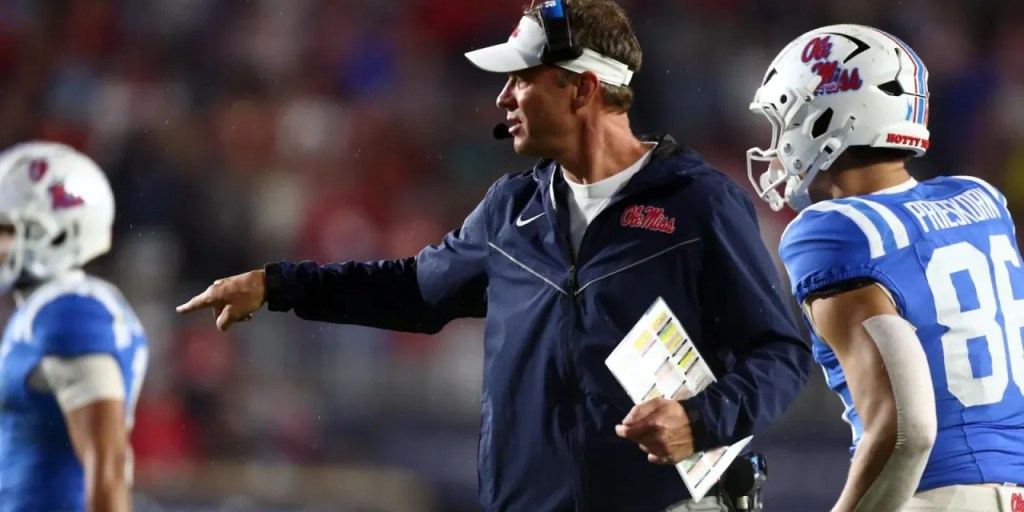
Over the past few seasons, the SEC has undergone a noticeable shift, not at the very top, but just beneath it, where competition is tightening. Programs like Missouri, Ole Miss, South Carolina, and Tennessee have broken through into legitimate threats that can beat just about anyone in the conference, while others such as Auburn, Florida, Texas A&M, and even Vanderbilt are showing signs that they may soon join the mix. These rising teams are challenging the traditional powers and proving they deserve a place in the national conversation, and the emergence of these second-tier contenders has made the conference deeper and more competitive than ever, leaving very few easy wins on the schedule. Unlike the B1G, where a handful of teams often dominate a weaker bottom half, the SEC thrives on its overall depth. As the gap between the elite and the rest continues to close, every Saturday feels like a playoff. In this article, I will reveal the third part of my SEC predictions and previews consisting of the following teams: Missouri, Oklahoma, Ole Miss, and South Carolina.
—————————————————————————————————————————————
Missouri Tigers
8/28 – vs. Central Arkansas – Win
9/6 – vs. Kansas – Win
9/13 – vs. Louisiana – Win
9/20 – vs. South Carolina – Loss
9/27 – vs. UMass – Win
10/4 – BYE
10/11 – vs. Alabama – Loss
10/18 – @ Auburn – Loss
10/25 – @ Vanderbilt – Loss
11/1 – BYE
11/8 – vs. Texas A&M – Win
11/15 – vs. Mississippi State – Win
11/22 – @ Oklahoma – Loss
11/29 – @ Arkansas – Loss
Final Record: 6-6 (2-6)
Coming off back-to-back double-digit-win seasons, Missouri’s 2025 season will be a mix of promise and uncertainty. Eli Drinkwitz has revived the Tigers as a real SEC contender for the first time since Gary Pinkel’s era, but this roster looks almost completely different. With so many new faces, it’ll take time to see where Missouri stands by the end of the season.
On offense, third-year coordinator Kirby Moore is managing a three-man quarterback battle between Penn State transfer Beau Pribula, redshirt junior Sam Horn, and talented freshman Matt Zollers to replace longtime starter Brady Cook. Whoever wins will hand the ball off to UL Monroe transfer Ahmad Hardy, who ran for over 1,300 yards last season and could emerge as one of the SEC’s most underrated backs. Jamal Roberts and true freshman Marquise Davis will also share carries. The wide receiver group lost stars Luther Burden III, Theo Wease Jr., and Mookie Cooper but added Mississippi State’s Kevin Coleman Jr., who joins returning Marquis Johnson and Joshua Manning to help stabilize the passing game. Tight end Brett Norfleet returns as a strong blocker and reliable target. Missouri’s offensive line will need to adjust without top-ten NFL draft pick Armand Membou. Cayden Green returns at guard, while Wake Forest’s Keagen Trost, West Virginia’s Johnny Williams IV, and Michigan’s Dominick Giudice add experience and talent up front.
On defense, Corey Batoon is back for his second season as coordinator after replacing new LSU defensive playcaller Blake Baker. His secondary ranked second in the SEC against the pass last year and could be even stronger this season. The safety group, including Marvin Burks Jr., Daylan Carnell, and seventh-year UNLV transfer Jalen Catalon, is particularly dangerous, and while the cornerback spot is less settled, veteran Dreyden Norwood, Washington State transfer Stephen Hall, and a returning Toriano Pride Jr. all offer potential. Linebacker Clyde Flagg Jr. is gone, but Triston Newsom and West Virginia transfer Josiah Trotter bring solid tackling ability, making them one of the more underrated SEC duos. Up front is the biggest question mark, as the Tigers struggled to pressure quarterbacks and lost leading sacker Johnny Walker Jr. Georgia transfer Damon Wilson II brings NFL-caliber talent off the edge, and returning linemen Zion Young, Chris McClellan, and Sterling Webb add needed stability.
Missouri’s schedule is one of the SEC’s lighter ones, and with only four road games, it’s definitely beneficial. Still, trips to Auburn and Oklahoma won’t be easy, and home games against South Carolina, Alabama, and Texas A&M are challenging. They’ll likely need to win at least one of those marquee home contests to stay competitive.
Ultimately, Missouri’s offense lacks big-game experience and may face struggles. Drinkwitz’s team scraped by in close games last season, and leaning on that again is risky. While a bowl appearance seems probable, some regression is likely before Missouri fully rebuilds and contends again.
—————————————————————————————————————————————
Oklahoma Sooners
8/30 – vs. Illinois State – Win
9/6 – vs. Michigan – Win
9/13 – @ Temple – Win
9/20 – vs. Auburn – Win
9/27 – BYE
10/4 – vs. Kent State – Win
10/11 – vs. Texas (in Dallas, TX) – Loss
10/18 – @ South Carolina – Loss
10/25 – vs. Ole Miss – Win
11/1 – @ Tennessee – Loss
11/8 – BYE
11/15 – @ Alabama – Loss
11/22 – vs Missouri – Win
11/29 – vs. LSU – Win
Final Record: 8-4 (4-4)
In their first SEC season, Oklahoma looked nothing like the offensive juggernaut from years past, and instead of shootouts, the Sooners leaned on defense and low-scoring battles. That transition aligned with Brent Venables’ long-term vision for sustained competitiveness, and now entering his fourth year, the defensive-minded head coach appears to have his most complete and balanced roster yet, offering a fresh chapter in Norman with a new-look offense and strong defensive foundation.
Last year’s offense struggled by not scoring more than 28 points in any SEC game and managing just 20 in a bowl loss to Navy. Hoping to turn things around, Venables hired offensive coordinator Ben Arbuckle from Washington State and added dynamic dual-threat quarterback John Mateer, who previously backed up first-rounder Cam Ward and broke out all of last season. Mateer replaces new Auburn quarterback Jackson Arnold, and he’ll be supported by California transfer Jadyn Ott, returning senior Jovantae Barnes, and rising sophomore Taylor Tatum to form one of the SEC’s more dangerous, productive rushing attacks. The passing game should also rebound with a healthy Deion Burks and Jayden Gibson leading the receiver corps, while Arkansas’s Isaiah Sategna and UAPB’s Javonnie Gibson arrive to offer deep pass-catching talent. With tight end Bauer Sharp off to LSU, Kaden Helms steps in as the new starter, supported by low-profile transfers. Nearly the entire offensive line returns, and standout FCS transfer Derek Simmons from Western Carolina adds quality depth and improved protection.
Defensively, Venables takes over play-calling duties after coordinator Zac Alley departed for West Virginia. The front four could be one of the best in the entire SEC. R Mason Thomas returns after a breakout nine-sack season, and the opposite edge will rotate between Florida State transfer Marvin Jones Jr. and former five-star Adepoju Adebawore. Inside, Damonic Williams and Gracen Halton anchor a deep group that includes elite sophomores David Stone and Jayden Jackson. At linebacker, losing Danny Stutsman stings, but Kip Lewis, Kobie McKinzie, and Oklahoma State transfer Kendal Daniels bring experience and toughness while Sammy Omosigho and a healthy Kendel Dolby add plenty of depth. The secondary looks solid too. Safeties Robert Spears-Jennings and Peyton Bowen headline the back end, while Peyton’s younger brother Eli joins Jacobe Johnson and Gentry Williams at corner, forming a young but battle-tested trio.
The schedule offers little relief with Michigan visiting early in a marquee nonconference clash, but LSU, Auburn, Missouri, and Ole Miss also come to Norman. Road games at Alabama, Tennessee, and South Carolina, plus the neutral Red River showdown against Texas, make this one of the SEC’s toughest paths.
Still, this team is built better than it was a year ago. Venables has addressed offensive shortcomings and doubled down on defensive identity, and while a title run feels premature, Oklahoma’s capable of surprising critics, playing at a higher level again, and reestablishing itself as a rising SEC contender.
—————————————————————————————————————————————
Ole Miss Rebels
8/30 – vs. Georgia State – Win
9/6 – @ Kentucky – Win
9/13 – vs. Arkansas – Win
9/20 – vs. Tulane – Win
9/27 – vs. LSU – Loss
10/4 – BYE
10/11 – vs. Washington State – Win
10/18 – @ Georgia – Loss
10/25 – @ Oklahoma – Loss
11/1 – vs. South Carolina – Win
11/8 – vs. The Citadel – Win
11/15 – vs. Florida – Win
11/22 – BYE
11/28 – @ Mississippi State – Win
Final Record: 9-3 (5-3)
Ole Miss narrowly missed last year’s College Football Playoff but still notched their third double-digit win season in four years and just the tenth in program history. That shows Lane Kiffin’s impact, and despite heavy roster turnover, there’s plenty to be excited about in Year Six in Oxford.
The offense should remain strong under Lane Kiffin, especially with Charlie Weis Jr. returning for his fourth season as offensive coordinator. With Jaxson Dart now a New York Giant, 19-year-old Austin Simmons is expected to take over at quarterback after flashing serious upside, and the backfield will feature Troy transfer Damien Taylor, who rushed for over 1,000 yards last season, alongside Logan Diggs. While the receiver room loses top weapons like Tre Harris, Juice Wells, and Jordan Watkins, Cayden Lee returns as the projected WR1 to build off of his 800+ yards in 2024, joined by Penn State’s Harrison Wallace III, Oklahoma State’s De’Zhaun Stribling, and another load of transfers that could all make impacts as rotational guys. Tight end Caden Prieskorn is gone, but Arkansas transfer Luke Hasz and Dae’Quan Wright should keep the position productive. The offensive line will undergo some changes but should remain solid with Jayden Williams at tackle, Brycen Saunders at center, and Arkansas guard Patrick Kutas stepping in as a key addition.
Even with all the hype around last year’s offense, Ole Miss quietly had one of the SEC’s best defenses, allowing a conference-low 80 rushing yards per game, the only unit in the country under 100, and leading the country in total sacks and TFLs. Pete Golding returns for his third season as coordinator, but the group is going through an overhaul. Walter Nolen III, JJ Pegues, Jared Ivey, and Princely Umanmielen are all in the NFL, but Nebraska transfer Princewill Umanmielen replaces his brother, LSU’s Da’Shawn Womack fills Ivey’s role, and Zxavian Harris and Jamarious Brown step in for Nolen and Pegues. At linebacker, Chris Paul Jr. departs, but Suntarine Perkins is back as potentially one of the nation’s best at the position with TJ Dottery manning the other spot. The secondary also reloads with Arkansas transfer Jaylon Braxton, South Alabama’s Ricky Fletcher, LSU’s Sage Ryan, and Washington State’s Kapena Gushiken stepping in for Trey Amos and Trey Washington.
Their schedule features early tests like Tulane at home, but it toughens up when LSU visits in late September. After a bye and a home game against Washington State, they travel to Georgia, a team they dominated last year, and Oklahoma, then return home to host South Carolina and Florida.
While many teams tend to fall off after significant roster turnover, no one recruits and reloads through the transfer portal quite like Lane Kiffin. Just like last year, his new additions should shine, and with a mostly winnable schedule, Ole Miss shouldn’t miss much of a beat, if they miss one at all.
—————————————————————————————————————————————
South Carolina Gamecocks
8/31 – vs. Virginia Tech (in Atlanta, GA) – Win
9/6 – vs. South Carolina State – Win
9/13 – vs. Vanderbilt – Win
9/20 – @ Missouri – Win
9/27 – vs. Kentucky – Win
10/4 – BYE
10/11 – @ LSU – Loss
10/18 – vs. Oklahoma – Win
10/25 – vs. Alabama – Win
11/1 – @ Ole Miss – Loss
11/8 – BYE
11/15 – @ Texas A&M – Loss
11/22 – vs. Coastal Carolina – Win
11/29 – vs. Clemson – Loss
Final Record: 8-4 (5-3)
South Carolina was just shy of its first College Football Playoff berth and first ten-win season since 2013. Over a decade later, Shane Beamer has transformed the culture in Columbia, and heading into Year Five, the Gamecocks look poised to take the next step into the 12-team field.
Last year’s Dowell Loggains-led offense leaned heavily on the run, but with both him and Rocket Sanders gone, new coordinator Mike Shula brings a fresh vision. That vision centers around rising star quarterback LaNorris Sellers, whose elite athleticism and NFL frame have drawn early Heisman buzz, and if he becomes a more consistent passer, a trip to New York in December is a realistic possibility. At running back, South Carolina awaits a decision on Utah State transfer Rahsul Faison’s eligibility, so if he’s unavailable, Oscar Adaway and Colorado’s Isaiah Augustave will handle duties in a backfield with depth but limited experience. The receiver room remains strong with Nyck Harbor, Mazeo Bennett Jr., Jared Brown, and several talented freshmen all bringing diverse skill sets, and while tight end Joshua Simon is gone, Michael Smith and Kentucky’s Jordan Dingle offer solid replacements. Up front, only two starters return, but one of them is former five-star Josiah Thompson, who’s joined by Wake Forest’s Nick Sharpe and Troy’s Boaz Stanley, providing hope for improvement.
On defense, coordinator Clayton White returns for his fifth season, but his top-20 unit from last year faces major turnover and must quickly reestablish chemistry. Edge rusher Dylan Stewart has the upside to become one of college football’s best, and while Kyle Kennard departs from the other side, Bryan Thomas Jr. is back and joined by Charlotte transfer Demon Clowney, cousin of Jadeveon. Tackles Tonka Hemingway and TJ Sanders are gone, so Monkell Goodwine, Texas A&M transfer Gabriel Brownlow-Dindy, and JUCO standout Zavion Hardy step up and anchor the interior. Linebacker is undergoing a full reset with Demetrius Knight Jr. and Bam Martin-Scott gone, so Fred Johnson, Florida State’s Shawn Murphy, and Alabama’s Justin Okoronkwo must develop quickly to keep up with SEC speed. In the secondary, safety Nick Emmanwori is now in Seattle, but DQ Smith and Jalon Kilgore return with Peyton Williams sliding into the other safety role. At corner, Judge Collier brings size and experience, while NC State transfer Brandon Cisse be a lockdown presence opposite him.
South Carolina opens with an Atlanta showdown against Virginia Tech, then faces tough SEC road games at LSU, Ole Miss, and Texas A&M, plus home games against Oklahoma and Alabama, before closing the season with a crucial rivalry game against Clemson that could impact their playoff chances.
While still chasing their first CFP bid, South Carolina is clearly trending upward. With growing promise and competitiveness in college football’s toughest conference, the program is building momentum, and Gamecock fans have plenty of reason to be excited about the future ahead.


 The Clutch Index
Leave a comment