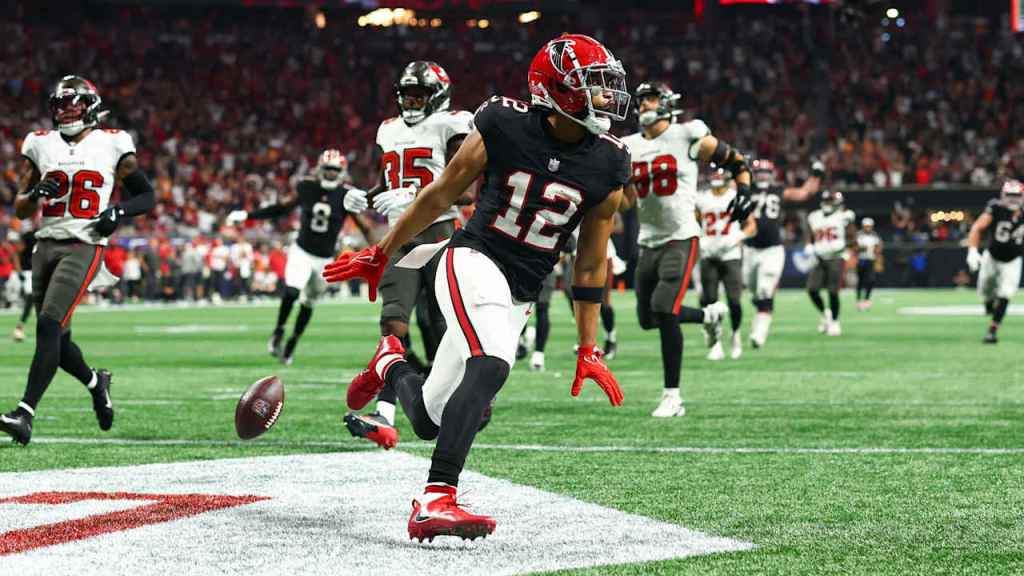
Moving on from yesterday’s takes for the NFC North, our attention now shifts to the NFC South, a division that presents a fascinating contrast: one where no true powerhouse exists, but several teams could emerge depending on how their storylines unfold. The division has long been defined by short-term bursts of success, and 2025 feels no different, with every franchise entering a pivotal stage of transition, development, or contention. After a promising debut campaign under head coach Raheem Morris, the Atlanta Falcons now look like the most complete and stable team in the division. With continuity on the offensive staff, a stronger identity, and a deeper roster on both sides of the ball, Atlanta may finally be ready to end its playoff drought. Meanwhile, the Carolina Panthers enter the second year of the Dave Canales era with more structure and direction. They’re still a young, rebuilding team, but the pieces are quietly coming together—especially after a strong offseason of development and acquisitions. In New Orleans, the Saints hit reset in dramatic fashion, welcoming Kellen Moore as their new head coach to lead a full-scale rebuild behind a creative offensive vision and fresh quarterback competition. And in Tampa Bay, the four-time defending division champs are hoping that continuity, experience, and an infusion of young talent can keep them atop a division that grows more competitive each season. With that in mind, let’s take a look at a division where all four teams enter the season with different timelines, trajectories, and promises of being a battleground of development, drama, and potential surprises throughout the season:
—————————————————————————————————————————————
Atlanta Falcons
9/7 – vs. Buccaneers – Win
9/14 – @ Vikings – Loss
9/21 – @ Panthers – Loss
9/28 – vs. Commanders – Loss
10/5 – BYE
10/13 – vs. Bills – Win
10/19 – @ 49ers – Loss
10/26 – vs. Dolphins – Win
11/2 – @ Patriots – Loss
11/9 – vs. Colts (in Berlin, Germany) – Win
11/16 – vs. Panthers – Win
11/23 – @ Saints – Win
11/30 – @ Jets – Win
12/7 – vs. Seahawks – Win
12/11 – @ Buccaneers – Loss
12/21 – @ Cardinals – Loss
12/29 – vs. Rams – Win
1/4 – vs. Saints – Win
Final Record: 10-7
After a busy offseason and a promising first year under head coach Raheem Morris, the Atlanta Falcons look ready to contend in the NFC South. Morris brings much-needed stability, and while 2024 was about laying the groundwork, 2025 feels like the season where things click. Offensive coordinator Zac Robinson returns to lead a motion-heavy, 11 personnel-based system built on rhythm and balance. On defense, new coordinator Jeff Ulbrich brings his familiar 3-4 scheme from the Jets that showcases an aggressive approach and fits Atlanta’s hybrid defenders. With a more complete roster, a capable quarterback room, and a dynamic backfield led by Bijan Robinson, the Falcons have real potential. The defense also has a chance to take a major step forward with added depth and playmaking at every level. With a stronger identity and clearer vision under Morris, Atlanta finally seems positioned for lasting success—not just a quick turnaround or patchwork rebuild.
Offensively, the Falcons have built one of the more intriguing quarterback rooms in the NFL, and overall, this group has the personnel and scheme familiarity to be far more efficient than last season. Kirk Cousins returns healthy and ready to lead again, but second-year quarterback Michael Penix Jr. looms large after showing enough upside to potentially become the long-term answer—though it’s still Cousins’ team for now. Bijan Robinson returns as the centerpiece after a strong rookie campaign, with Tyler Allgeier continuing to serve as one of the league’s better rotational backs, making the ground game a strength of the roster. Out wide, Drake London is steadily developing into a true top wideout, while Darnell Mooney brings speed and separation alongside veteran DJ Chark and rookie Nick Nash. Depth and versatility also come from KhaDarel Hodge, Ray-Ray McCloud III, and Jamal Agnew in the slot, and all three players can even become threats in the return game as well. At tight end, Kyle Pitts remains a vertical weapon in the passing game, while Charlie Woerner provides needed physicality in run situations. The offensive line is mostly intact, anchored by Jake Matthews and Kaleb McGary at the tackles. Rookie Jack Nelson adds depth, while Chris Lindstrom continues his All-Pro-caliber play inside. Matthew Bergeron and Ryan Neuzil round out the starting interior trio, with Kyle Hinton and Jovaughn Gwyn available as capable depth.
Atlanta’s defense, on the other hand, made some of its boldest moves in free agency, signaling Ulbrich’s desire to lean into speed, pressure, and versatility. The defensive line starts with former Charger Morgan Fox, who brings inside disruption, alongside returners David Onyemata and Zach Harrison as the size up front is there. However, with longtime leader Grady Jarrett now in Chicago and Eddie Goldman in Washington, depth will be critical. Second-year prospects Ruke Orhorhoro and Brandon Dorlus, UDFA Simeon Barrow Jr., and Kentavius Street will all see rotational snaps in the trenches. The outside linebacker unit will be one of the most watched, headlined by veteran Leonard Floyd and rookies Jalon Walker and James Pearce Jr., both of whom have starter-level traits. Without Matthew Judon, the pressure will be on Arnold Ebiketie and Bralen Trice to make consistent contributions. Inside, former Raider Divine Deablo is a major addition next to Kaden Elliss, while Troy Andersen returns from injury and JD Bertrand offers potential as a rookie run-stopper. In the secondary, All-Pro safety Jessie Bates III continues to anchor the back end, now joined by veteran Jordan Fuller, who brings experience and reliability. Rookie Xavier Watts offers exciting ball-hawking ability and could see action in sub-packages. AJ Terrell Jr. remains one of the league’s top corners and will start opposite Mike Hughes, who’s back in a familiar system. Dee Alford re-signed and is expected to remain the nickelback, but there’s young competition from rookies Billy Bowman Jr. and Cobee Bryant. Depth remains solid with Clark Phillips III, and Mike Ford Jr. returns after a stint in Cleveland. It’s a young, aggressive unit with a mix of veterans and developmental pieces that fit Ulbrich’s scheme well.
Looking at Atlanta’s 2025 schedule, the road to improvement appears wide open, especially in the context of the NFC South. The Falcons open at home against the defending division champion Buccaneers before heading to Minnesota for a Sunday night matchup against Kirk Cousins’s former team. Before their early bye, they host the Commanders, followed by a two-game stretch: a Monday night clash with the Bills and a Sunday night road trip to San Francisco. Long travel continues with a trip to Berlin to face the Colts. From there, a home game against the Panthers could shape the NFC South race, and a December matchup with Seattle along with a Thursday night trip to Tampa Bay could define their playoff trajectory. They cap off their regular season at Arizona before hosting the Rams on Monday night and the rival Saints in the finale, which are three very winnable games that could boost them into the postseason with much-needed momentum.
Ultimately, I envision a slow start for the Falcons followed by a very strong post-bye stretch leading them to a 10-7 season, which could be enough to take the crown in a division that lacks a dominant presence. While no game is a gimme in the NFL, they benefit from a manageable home slate and few elite opponents. Given their new roster makeup, they should gel quickly with a shared drive as the year progresses, especially since the quarterback room brings a mix of experience and upside, the offensive line looks improved, Bijan Robinson is primed to be one of the league’s best, and the defense has a top coordinator leading them. The franchise seems aligned behind a shared vision for the first time in years, especially with the amped up leadership and clarity that Raheem Morris brings. More importantly, they no longer feel like a team patching holes but rather one building toward sustained success. If they stay healthy and resilient, Atlanta’s capable of racking wins down the stretch and seizing control of the NFC South, which is something they’ve struggled to do in recent memory.
—————————————————————————————————————————————
Carolina Panthers
9/7 – @ Jaguars – Loss
9/14 – @ Cardinals – Loss
9/21 – vs. Falcons – Win
9/28 – @ Patriots – Win
10/5 – vs. Dolphins – Loss
10/12 – vs. Cowboys – Win
10/19 – @ Jets – Loss
10/26 – vs. Bills – Loss
11/2 – @ Packers – Loss
11/9 – vs. Saints – Win
11/16 – @ Falcons – Loss
11/24 – @ 49ers – Loss
11/30 – vs. Rams – Loss
12/7 – BYE
12/14 – @ Saints – Win
12/21 – vs. Buccaneers – Win
12/27-28 – vs. Seahawks – Win
1/4 – @ Buccaneers – Loss
Final Record: 7-10
Following a transitional first year under head coach Dave Canales, the Carolina Panthers will have a little more clarity, cohesion, and optimism around them in 2025. Canales, known for his player-first leadership style and developmental focus, brings back a restructured staff that includes offensive coordinator Brad Idzik and defensive coordinator Ejiro Evero. Idzik continues to deploy a balanced, motion-based one running back, one tight end system designed to simplify reads and build rhythm for their youth, and Evero will maintain his base 3-4 scheme. While last season was marked by inconsistency and injuries, this year’s Panthers team has quietly assembled one of the more intriguing young cores in the NFC. With a roster retooled through the draft and free agency, they hope to take another step in their rebuild—even if they’re not quite ready to contend just yet.
With a more friendly system for third-year quarterback Bryce Young, improved skill talent, and a more physical offensive line, the Panthers’ offense looks primed to make meaningful strides in 2025, and they will continue to place their trust in Young as he now enters a critical developmental year under center. Andy Dalton remains the emergency fallback option and even was in 2024 until late in the season when Young started to piece things together and ultimately prove that he’s their guy moving forward, and now in 2025, the scheme is built to give Young more confidence in himself and his teammates. The run game is anchored by Chuba Hubbard and former Cowboy Rico Dowdle, with rookie Trevor Etienne providing explosive depth and rotational upside. The receiving corps is headlined by second-year wideout Xavier Legette, with lengthy, athletic rookie Tetairoa McMillan expected to contribute immediately. Veterans Adam Thielen and the returning Hunter Renfrow, who’s back in the Carolinas and motivated after several seasons with the Raiders, add reliability and savvy route-running, and young playmakers like Jalen Coker and David Moore, who showed flashes late in 2024, will also push for targets. At tight end, Tommy Tremble returns as a versatile piece, now joined by Ja’Tavion Sanders and rookie Mitchell Evans—a trio that gives Carolina one of the deepest young rooms in the league at that position. Up front, former first-round pick Ikem Ekwonu anchors the left side, with veteran Brady Christensen available to step in if needed. Free agent pickup Robert Hunt solidifies the right guard spot, while Damien Lewis and Austin Corbett round out the interior alongside returning backup Cade Mays. Taylor Moton continues to be a pillar at right tackle, and Chandler Zavala adds depth across the interior.
Defensively, the picture is much murkier as the unit could be vulnerable to high-powered passing attacks and more polished offenses in their path to making the roster more balanced. Ejiro Evero’s group has a significantly different look thanks to free agent signings and roster turnover, but there are serious questions about consistency, chemistry, and depth. The defensive line is headlined by Derrick Brown, one of the league’s premier interior disruptors. He’s now joined by Tershawn Wharton, signed from Kansas City, and Bobby Brown III, signed from the Rams to replace veterans like DeShawn Williams and Shy Tuttle. In addition to those guys, A’Shawn Robinson adds rotational stability, while LaBryan Ray remains a depth piece. On the edge, Carolina made bold moves to reshape the pass rush with Patrick Jones II and DJ Wonnum set to start initially, but rookies Nic Scourton and Princely Umanmielen offer more potential than polish and could both challenge for the starting roles later on. At linebacker, Christian Rozeboom and second-year player Trevin Wallace step into starting roles, but both remain untested in full-time capacities. In the secondary, Jaycee Horn and Mike Jackson lead a group that could be solid if healthy with durability and depth being issues on the outside, and Chau Smith-Wade and Akayleb Evans will be tested early with the depth chart behind them being thin on the inside. At safety, Demani Richardson and former Raider Tre’von Moehrig are the projected starters, and while veteran Nick Scott and rookie Lathan Ransom add situational help, it’ll be determined soon if anyone in that group can become a consistent difference-maker.
The Panthers’ 2025 schedule should be a little more accessible for wins, but they’ll need to navigate a mix of emerging contenders and long travel stretches out west. They open with two tough intriguing matchups in Jacksonville and Arizona before returning home for a big-time divisional battle against the Falcons. Early games against the Patriots, Dolphins, and Cowboys will test both sides of the ball, and the midseason stretch doesn’t get much easier with the Bills and Packers in back-to-back weeks. A late-season Monday Night Football trip to San Francisco could prove daunting, followed by a late bye week and home games against the Rams and Seahawks as well as two late matchups against the Buccaneers.
While there are certainly opportunities for wins, particularly at home and within the division, this is a challenging slate for a team still trying to establish itself. The margin for error will be slim, and Carolina will need to stay healthy and get steady quarterback play to avoid being overwhelmed by this stretch. I’m projecting a 7-10 finish for Carolina, not because they lack offensive talent or direction, but because their defense might not be ready to carry its weight. While Evero’s system is modern and aggressive, it’s unclear whether this group has the personnel to execute it consistently. However, there’s still real promise under Dave Canales with a clear offensive identity that suits Bryce Young’s strengths, and the weapons around him are deeper and more dynamic than a year ago. Carolina may not be ready to challenge for the playoffs just yet, but the foundation appears more solid than it’s been in years. A seven-win season would mark tangible progress, and put the Panthers on a steadier path into 2026 especially if their defense can start improving.
—————————————————————————————————————————————
New Orleans Saints
9/7 – vs. Cardinals – Loss
9/14 – vs. 49ers – Loss
9/21 – @ Seahawks – Loss
9/28 – @ Bills – Loss
10/5 – vs. Giants – Win
10/12 – vs. Patriots – Loss
10/19 – @ Bears – Loss
10/26 – vs. Buccaneers – Loss
11/2 – @ Rams – Loss
11/9 – @ Panthers – Loss
11/16 – BYE
11/23 – vs. Falcons – Loss
11/30 – @ Dolphins – Loss
12/7 – @ Buccaneers – Loss
12/14 – vs. Panthers – Loss
12/21 – vs. Jets – Win
12/28 – @ Titans – Loss
1/4 – @ Falcons – Loss
Final Record: 2-15
With a major organizational reset this offseason, the New Orleans Saints enter 2025 with a new identity under first-year head coach Kellen Moore. Fresh off helping the Eagles win a Super Bowl as offensive coordinator, Moore brings creativity and offensive pedigree to a franchise beginning a long-overdue rebuild following the retirement of Derek Carr. Known for his innovation and quarterback development, he now leads a youth movement focused on long-term growth, and joining him is offensive coordinator Doug Nussmeier, whose motion-based, spread-heavy 11 personnel system will be tailored to whoever wins the open quarterback job. Defensively, Brandon Staley takes over as coordinator, bringing a base 4-3 scheme filled with disguised pressures and complex coverages. With a new quarterback competition and a roster influx on both sides of the ball, the Saints have clearly prioritized development over immediate success.
The New Orleans offense has speed and versatility, but the quarterback room is the biggest question mark. The battle between rookie Tyler Shough, second-year player Spencer Rattler, and possibly Jake Haener will define the season. Rattler flashed in limited reps last year and has the most chemistry with returning skill players, while Shough brings toughness and an NFL-caliber arm. Whoever wins the job will benefit from a deep and flexible backfield. While Alvin Kamara’s role hasn’t nearly been the same as before, he’ll now be joined by a newly assembled committee featuring Kendre Miller, Cam Akers, rookie Devin Neal, wideback Velus Jones Jr., and smaller fullback option Clyde Edwards-Helaire, who may serve as a hybrid fullback. Ever since the injury concerns and release of Michael Thomas, there hasn’t been a clear top wideout, but while Chris Olave is the top returning option, veteran Brandin Cooks is back for another stint in New Orleans to stretch defenses and mentor the group. Rashid Shaheed adds explosiveness in the slot, while Bub Means, Cedrick Wilson Jr., Donovan Peoples-Jones, and Dante Pettis bring depth, speed, and return value. Tight end Juwan Johnson leads a unit that includes Foster Moreau and Taysom Hill, giving Nussmeier flexibility in multiple sets. On the line, rookie Kelvin Banks Jr. is the left tackle of the future, though he’s recovering from injury, with Josh Ball and Landon Young competing for depth. Trevor Penning holds the left guard spot, with Dillon Radunz pushing for reps. Veteran center Erik McCoy is a steady presence, joined by Cesar Ruiz and second-year right tackle Taliese Fuaga. If the line holds and the quarterback plays well, this group could move the ball.
The defense, however, has multiple concerns that could add up by the end of the season. Staley’s scheme requires timing, communication, and discipline, which are traits that may not emerge right away with a more inexperienced secondary and difficulty from their front to stop the run, and while there’s talent here, cohesion will be difficult to build quickly as generating consistent pressure and limiting breakdowns in coverage will be major hurdles. For starters, he defensive line is anchored by longtime veteran Cameron Jordan, who is approaching the back end of his stellar career, and free agent addition Jonathan Bullard brings size as well. Inside, Bryan Bresee has been a solid pass rusher, Davon Godchaux was acquired via trade in order to provide some run-stopping help, and both Khalen Saunders and rookie Vernon Broughton round out a rotation with upside but limited consistency. On the edges, Chase Young and Carl Granderson return as the primary pass rushers, and behind them, Chris Rumph II and Isaiah Foskey are still developing as possible role players with some possible snaps if Young’s durability continues to become an issue. The linebacker corps is steadier, led by veteran DeMario Davis, who continues to defy age, while Pete Werner and rookie Danny Stutsman will be leaned on to fill gaps and cover space. The secondary is young and a work in progress. Kool-Aid McKinstry and Isaac Yiadom are set as the top corners, with Alontae Taylor providing versatility as a nickel or deep safety, while Ugo Amadi returns and rookie Quincy Riley arrives to bolster depth. At safety, Julian Blackmon and Justin Reid were recently brought in to provide leadership and physicality. Blackmon will now get the nod at free safety with rookie Jonas Sanker behind him, and Jordan Howden may see a reduced role behind Reid.
The Saints’ schedule isn’t brutal by NFC standards, but it’s challenging enough to make growth difficult for this roster specifically. They open with back-to-back home games against the Cardinals and 49ers before heading to Seattle and Buffalo. October softens slightly with home games versus the Giants and Patriots, and a road trip to face the Bears, Rams, and a divisional home game versus the Buccaneers. November includes tricky divisional games against Carolina and Atlanta surrounding their bye week. From there, their late stretch includes back-to-back road matchups in Florida where they’ll face the Dolphins and Buccaneers before finishing with the Jets, Titans, and rematches with the Panthers and Falcons.
Given how unsettled the quarterback room is and how inexperienced the defense looks, New Orleans will have a razor-thin margin for error all season. Even seemingly favorable matchups like the Giants and Jets could slip away with just a few miscues. While Moore and Nussmeier may coax production from the offense, especially if one quarterback seizes control, the defense is likely to give up chunk plays early and often. Inconsistency in the pass rush, blown coverages, and communication breakdowns could be recurring issues. With that in mind, I could easily see this Saints team finishing 2-15, which isn’t a full indictment of the new coaching staff or individual talent, but rather more of a reflection of the full-scale rebuild underway. Moore was hired to shape a future long-term contender, and his team is starting fresh with a focus on player progression and identity-building. If the young core shows growth, more specifically in the quarterback room, then the season can still be viewed as a step forward and won’t have to look for another possible option at the position next year. The wins may not come this year, but the foundation is being laid for a more competitive and sustainable future.
—————————————————————————————————————————————
Tampa Bay Buccaneers
9/7 – @ Falcons – Loss
9/15 – @ Texans – Loss
9/21 – vs. Jets – Win
9/28 – vs. Eagles – Win
10/5 – @ Seahawks – Loss
10/12 – vs. 49ers – Win
10/20 – @ Lions – Loss
10/26 – @ Saints – Win
11/2 – BYE
11/9 – vs. Patriots – Win
11/16 – @ Bills – Loss
11/23 – @ Rams – Loss
11/30 – vs. Cardinals – Win
12/7 – vs. Saints – Win
12/11 – vs. Falcons – Win
12/21 – @ Panthers – Loss
12/28 – @ Dolphins – Loss
1/3-4 – vs. Panthers – Win
Final Record: 9-8
The Tampa Bay Buccaneers have won four consecutive NFC South titles dating back to their Tom Brady era, and while aiming for a fifth in 2025, they face new challenges that require both optimism and growth. Todd Bowles, now in his fourth year as head coach, remains a steadying force and respected defensive mind. His base 3-4 scheme continues to shape the team’s identity, though execution remains a concern with new personnel. On offense, first-year coordinator Josh Grizzard brings a fresh look. Coming from the Dolphins, Grizzard favors 11 personnel and a rhythm-based, timing-focused attack that should benefit their veteran quarterback if the offensive line holds up. Following a transitional offseason marked by key departures, strategic free-agent additions, and an influx of young talent, the Bucs offer both promise and volatility as they retool around their remaining veteran core.
Tampa Bay remains committed to Baker Mayfield on offense as he enters his third year as the starter, and Grizzard’s pass-leaning system emphasizes spacing and timing, better suiting Mayfield’s skill set than past schemes. The backfield will use a committee approach featuring second-year runner Bucky Irving and the steady Rachaad White, and when third-string back Sean Tucker sees touches, he’s also shown flashes worth exploring. Mike Evans returns after re-signing and remains the heartbeat of the passing game, and the offensive staff is hoping that Chris Godwin is expected to be healthier and more effective than last year. In addition to that dynamic duo, rookie Emeka Egbuka brings precise route running and sure hands to the receiving corps, and even if he falters, there’s plenty of depth that comes from Trey Palmer, Jalen McMillan, Sterling Shepard and rookie Tez Johnson—a dynamic weapon with great speed and route-running abilities. Tight end Cade Otton returns after another solid year, and Payne Durham could see more involvement in Grizzard’s packages. Up front, health remains a concern, especially with star tackle Tristan Wirfs unlikely to be fully healthy to start the year. Former 49ers tackle Charlie Heck will fill in temporarily, while the interior line features veteran Ben Bredeson and promising second-year player Graham Barton at center. Cody Mauch and Luke Goedeke round out a line with upside but limited cohesion. If the unit gels and Grizzard’s system finds rhythm, the offense should remain efficient and explosive, though it may initially lean on chunk plays to stay afloat.
Bowles also wants to continue emphasizing versatility and physicality on defense as well, though the unit has seen a pretty decent turnover. Logan Hall and Calijah Kancey return as disruptive interior linemen, with Kancey especially flashing more in year two. Greg Gaines and Eric Banks still offer steady rotation value, while rookie Elijah Roberts could emerge as a situational pass rusher. Vita Vea remains a big contributor in the middle and may be supplemented by 450-pound UDFA Desmond Watson, now the league’s largest player. On the edge, Haason Reddick arrives from New York and immediately becomes the top pass rusher, pairing with the young, explosive Yaya Diaby, and both Chris Braswell and rookie David Walker provide depth alongside the re-signed Anthony Nelson. At linebacker, Lavonte David continues to defy age after re-signing, while Anthony Walker Jr. arrives from Miami and will compete with SirVocea Dennis for the spot next to him. The secondary has undergone changes as well. Zyon McCollum continues playing a big role opposite Jamel Dean, though rookie Benjamin Morrison could push for reps once healthy. Former safety Josh Hayes transitions to a depth nickel role and joins former Lion Kindle Vildor as key rotational pieces. Christian Izien returns as the primary nickel, while rookie Jacob Parrish is in line for a backup role. At safety, Antoine Winfield Jr. leads the back end, flanked by second-year player Tykee Smith and Kaevon Merriweather, who resigned this offseason and still remains in development.
The Buccaneers’ schedule is easily the most difficult in the division, and it features early and late-season challenges that could define its playoff hopes. They’ll open on the road in Atlanta and then Houston Monday Night Football. A tough home matchup a couple of weeks later with the Eagles follows just before another primetime test in Detroit. After divisional play and a needed midseason bye, they return to host the Patriots before road trips to Buffalo and then Los Angeles in another primetime clash on Sunday night. December ramps up with a critical Thursday night game against the Falcons, followed by road trips to Carolina and Miami, and then a home finale versus the Panthers for the second time in just a three-week span, possibly determining if they return to the postseason as they race towards the top of the NFC South against the Falcons.
Playing in a division still without a dominant team, the Buccaneers have a real opportunity, but they must survive a brutal early stretch while managing key injuries. However, they’ll still find themselves pretty close to where they were last season as they finish around 9-8 once again, which has been enough to claim the NFC South in recent seasons and reflects the roster’s potential more than national expectations. Early injuries, particularly along the offensive line and in the defensive backfield, could hinder momentum and slow cohesion, especially with new starters, and adjusting to a new offensive and defensive system will take time. Tampa Bay also faces the challenge of replacing several veterans including Shaq Barrett, Mike Edwards, and Robert Hainsey, all while trying to develop young contributors into reliable pieces for both this year and beyond. With plenty of veterans inching toward the latter stages of their careers, developing the next wave of stars is critical. Among NFC South rosters, the Buccaneers likely have the highest ceiling, but realizing that potential means playing well early and avoiding further injuries. If the team’s younger players can grow quickly and Grizzard proves to be a progressive playcaller on offense, they have a legitimate shot for, at worst, a Wild Card berth.
Stay tuned next weekend when I begin wrapping up my previews and predictions by shifting over to the last two divisions: the NFC East and NFC West!


 The Clutch Index
Leave a comment