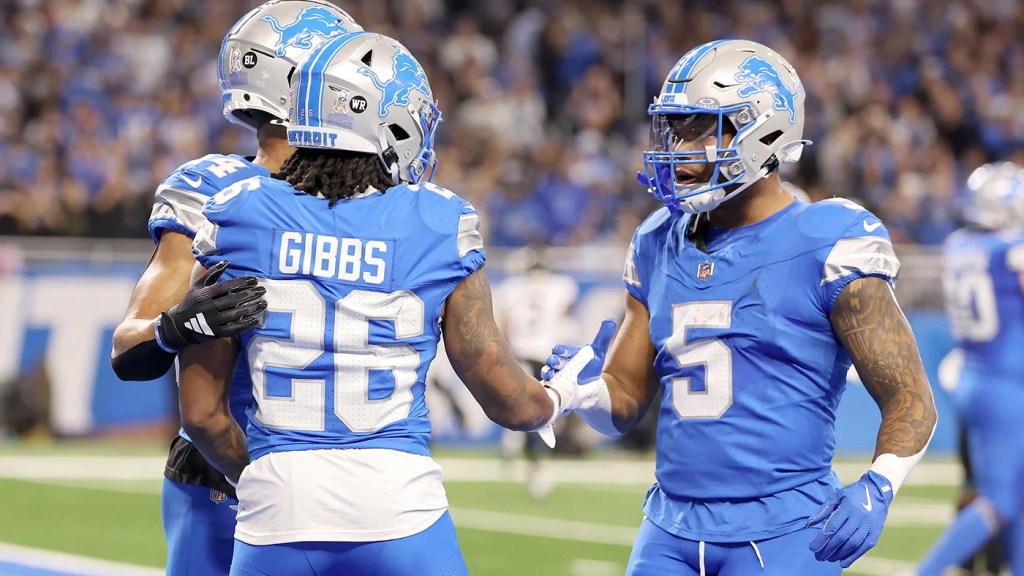
Now that I’ve covered every AFC team, it’s time that I turn my attention over to the NFC, starting with the NFC North. This division heads into the 2025 season as one of the league’s most intriguing and competitive divisions, marked by a blend of fresh leadership, rising stars, and established contenders all jockeying for supremacy. The Chicago Bears are embarking on a new chapter under first-year head coach Ben Johnson, bringing a modern offensive approach from the division-rival Lions paired with veteran defensive leadership aimed at jumpstarting a young roster. Meanwhile, Detroit continues to build on their recent resurgence, with Dan Campbell’s gritty culture and their new coordinator duo’s versatile schemes positioning them as a serious Super Bowl contender. The Green Bay Packers, while continuing to build around Jordan Love, rely on Matt LaFleur’s steady hand and a balanced offensive attack, while integrating a youthful but promising defense. Finally, the Minnesota Vikings look to push beyond their recent middling finishes with Kevin O’Connell’s focus on developing young talent—especially their new starting quarterback—around key veterans and a fortified roster ready to challenge the division’s best again. Let’s take a closer look at a division that could promise a more thrilling, tightly contested race between all four teams throughout the season:
—————————————————————————————————————————————
Chicago Bears
9/8 – vs. Vikings – Win
9/14 – @ Lions – Loss
9/21 – vs. Cowboys – Win
9/28 – @ Raiders – Loss
10/5 – BYE
10/13 – @ Commanders – Loss
10/19 – vs. Saints – Win
10/26 – @ Ravens – Loss
11/2 – @ Bengals – Loss
11/9 – vs. Giants – Win
11/16 – @ Vikings – Loss
11/23 – vs. Steelers – Loss
11/28 – @ Eagles – Loss
12/7 – @ Packers – Loss
12/14 – vs. Browns – Win
12/20 – vs. Packers – Win
12/28 – @ 49ers – Win
1/4 – vs. Lions – Win
Final Record: 8-9
The 2025 Chicago Bears enter a new era with a mix of optimism and caution under first-year head coach Ben Johnson. After rising to prominence as Detroit’s offensive coordinator and spending a brief stint in Seattle, Johnson now leads a Bears franchise eager to turn the page with young talent and a modern offensive philosophy. Johnson brings with him offensive coordinator Declan Doyle, who installs an 11-personnel-heavy scheme on 69% of snaps that leans on spacing, timing routes, and backfield versatility. On defense, former Saints head coach and veteran play-caller Dennis Allen takes over with a base 4-2 alignment, aiming to generate more four-man pressure while simplifying reads for a young linebacker corps.
Doyle’s offense is anchored by second-year quarterback Caleb Williams, the 2024 first overall pick, who now has the reins of the team fully in his hands. The front office focused on surrounding him with dynamic weapons and stable protection. At running back, D’Andre Swift leads the charge again after gaining momentum later on in 2024, but Roschon Johnson and rookie Kyle Monangai are expected to earn touches in a rotational role, which fits Doyle’s preference for backs who can catch out of the backfield. DJ Moore remains the top wideout and will be complemented by Rome Odunze, who enters his second NFL season with major breakout potential, and with Keenan Allen back in LA, Olamide Zaccheaus is the current slot option, though Missouri rookie Luther Burden III is expected to push hard for that role. Devin Duvernay, a free-agent addition from Jacksonville, brings special teams prowess and can contribute as a gadget player and return man, while Tyler Scott adds deep speed in four-wide looks. At tight end, rookie Colston Loveland gives the Bears a more athletic pass-catching threat that pairs well with Cole Kmet’s physical blocking and red zone presence, and Durham Smythe, who was signed out of Miami, adds reliable veteran depth. The offensive line is where much of Chicago’s offseason work paid off with guard Joe Thuney being acquired in a trade from the Chiefs, which solidifies the left guard spot next to Braxton Jones, who returns at left tackle. Center Drew Dalman, another key signing from Atlanta, provides a steady interior presence. Right guard will be manned by former Ram Jonah Jackson, another guard they acquired in a trade, though rookie Luke Newman is a name to watch. At right tackle, Darnell Wright returns with second-year lineman Kiran Amegadjie backing him up and rookie Ozzy Trapilo showing promise, which could help him factor in at some point either as a swing tackle or a long-term starter on the left side.
Defensively, Dennis Allen’s unit doesn’t feature elite talent across the board, but there’s plenty to build with. Montez Sweat anchors the edge, and he’s joined by new addition Dayo Odeyingbo from the Colts, who brings length and disruption. Inside, the pairing of veteran Grady Jarrett and third-year tackle Gervon Dexter Sr. offers physicality and upside, and rookie Shemar Turner could eventually push Dexter for reps with Andrew Billings giving the Bears reliable depth and run-stopping ability. The linebacker group features returning starters TJ Edwards and Tremaine Edmunds, who should thrive in the 4-2 base. Rookie Ruben Hyppolite II has flashed enough to earn backup snaps as Jack Sanborn’s replacement, while youngsters Noah Sewell and Power Echols give the unit promising insurance. The secondary is headlined by Jaylon Johnson and Tyrique Stevenson, one of the more underrated corner duos in the league, and rookie Zah Frazier will be a long-term developmental piece with high upside even if he doesn’t get a ton of playing time right away. Kyler Gordon mans the nickel role, with veterans Nick McCloud and Shaun Wade offering depth, and at safety, the starting duo of veteran Kevin Byard III and rising playmaker Jaquan Brisker brings physicality and range. Behind them, Jonathan Owens is a strong special teams contributor who can rotate into box packages, and UDFA Major Burns could get a chance later on to develop into a useful sub-package option. The defense won’t be elite, but with more consistency in the front four and Allen’s scheme emphasizing simplified responsibilities, this group could be respectable and opportunistic.
The Bears’ 2025 schedule doesn’t offer much relief for a team in transition. They begin with a divisional Monday Night Football matchup against the Vikings, followed by back-to-back challenges at Detroit and home versus Dallas. An early bye gives them a reset, but the second half of the schedule is packed with playoff contenders. They face the Commanders on a Monday night and then the Ravens and Bengals in back-to-back weeks before entering a late-season gauntlet: the Steelers, a Black Friday showdown with the Eagles, two matchups with the rival Packers, a primetime trip to San Francisco, and a home finale against the Lions.
I wouldn’t consider their roster to be one that contends for division titles quite yet, but I also wouldn’t consider it a rebuilding roster either with all of the young upside they have as their ultimate goal is to try and develop and create cohesion within their roster. If Williams takes a step forward, particularly with decision-making and pocket command, the offense has the skill, talent and protection to be dangerous. The depth infused across both lines and in the secondary should keep the Bears competitive, but the learning curve will be steep under a new coaching staff, especially with so many key rookies and second-year contributors. With growing pains expected and a tough division that they have to go through, I’d say the Bears finishing 8-9 this season is pretty fair. That may not seem like much on the surface, but in the context of a first-year regime establishing identity and culture, it’s an important foundational step. If Johnson, Williams, and the young core continue progressing, Bears fans should feel encouraged about where the franchise is heading.
—————————————————————————————————————————————
Detroit Lions
9/7 – @ Packers – Loss
9/14 – vs. Bears – Win
9/22 – @ Ravens – Loss
9/28 – vs. Browns – Win
10/5 – @ Bengals – Loss
10/12 – @ Chiefs – Loss
10/20 – vs. Buccaneers – Win
10/26 – BYE
11/2 – vs. Vikings – Win
11/9 – @ Commanders – Win
11/16 – @ Eagles – Win
11/23 – vs. Giants – Win
11/27 – vs. Packers – Win
12/4 – vs. Cowboys – Win
12/14 – @ Rams – Win
12/21 – vs. Steelers – Win
12/25 – @ Vikings – Win
1/4 – @ Bears – Loss
Final Record: 12-5
Over the last few seasons, the Detroit Lions have transformed themselves from a bottom-tier franchise in an extended rebuild into one of the NFL’s most well-respected and hard-nosed Super Bowl contenders. That belief and drive that they embrace has been sparked by fifth-year head coach Dan Campbell, who has helped transform the culture in Detroit and has turned the Lions into a team that wins with toughness, balance, and emotion. While Campbell remains the foundation, there are some new voices this year, most notably offensive coordinator John Morton, a former Jets and Saints play-caller who brings an 11-personnel-heavy attack that leans into motion, tempo, and versatility, and some trickery. On defense, Kevin Sheppard was promoted to the new coordinator position, installing a base 4-2 front that prioritizes interior control and athleticism in space. These changes reflect Detroit’s push for refinement, not reinvention, evolving a roster that’s already loaded with returning contributors but aiming to maintain their spot at the top of the NFC’s pecking order.
Offensively, the Lions retain nearly all their core, with quarterback Jared Goff returning to steer the ship. Goff continues to be supported by one of the most balanced backfields in the league in Jahmyr Gibbs and David Montgomery, whose contrasting styles allow Detroit to dictate pace and scheme. The passing game leans heavily on Amon-Ra St. Brown’s consistency and toughness in the slot, and they still hope Jameson Williams can develop into a full-time outside weapon with breakaway speed with Tim Patrick taking on the other side. The depth behind them is solid but young with Kalif Raymond returning and Ronnie Bell arriving, and rookies like Dominic Lovett and Isaac TeSlaa will be fighting for rotational snaps. At tight end, Sam LaPorta is already one of the league’s most dangerous young weapons, and blocking specialist Brock Wright gives Morton the ability to shift between spread looks and power packages without tipping his hand. The offensive line is mostly intact, with tackles Taylor Decker and Penei Sewell anchoring both edges. Graham Glasgow is back at right guard and Christian Mahogany takes the left guard spot, while rookie Tate Ratledge steps in to replace Kevin Zeitler on the left. In addition, Trystan Colon arrives from Arizona and will compete at center until injured rookie Miles Frazier returns to challenge for an interior spot as well, and tackle Dan Skipper can provide swing depth anywhere on the offensive line. I’ve considered this Lions offense to be one of the NFL’s most enjoyable units to watch, and once again, that designation will hold true.
On the defensive side, Detroit’s front seven features continuity and quiet upgrades. Aidan Hutchinson is supposed to return from his gruesome leg injury earlier last season to form the heartbeat of the pass rush, and he’ll now be joined by former Vikings edge Marcus Davenport, a low-risk signing that’s set to replace the currently-unsigned Za’Darius Smith as well as rotational depth pieces in Josh Paschal, Al-Quadin Muhammad, and Boise State rookie Ahmed Hassanein. On the interior, Alim McNeill and DJ Reader form a strong base tandem, and both rookie Tyleik Williams and second-year backup Mekhi Wingo will rotate in to keep bodies fresh. At linebacker, Alex Anzalone and Jack Campbell return as the primary tandem with Malcolm Rodriguez and Derrick Barnes still in the mix depending on down and distance, and veteran Zach Cunningham was added from Denver for depth, rounding out a group that fits the new 4-2 front well. The secondary saw the biggest facelift as Terrion Arnold broke out late last year as a rookie and is now viewed as a future star, and veteran DJ Reed was brought over from the Jets to replace new Patriot Carlton Davis III. Former long-time Eagle Avonte Maddox joins Amik Robertson in the nickel rotation, and rookies like Ennis Rakestraw Jr. and Dan Jackson add youth and versatility. At safety, Brian Branch and Kerby Joseph form one of the league’s most promising young duos, and Jackson’s ability to play downhill could make him a long-term piece. Despite some offseason attrition, the Lions’ defense looks deeper and more adaptable than a year ago.
The Lions proved last year with all of their opportunities that they belong among the league’s elite, but this year, they have a gauntlet to go through on their schedule. They open with a road trip to Lambeau against the Packers, followed by a winnable game against the Bears and former offensive coordinator Ben Johnson before diving into a brutal stretch that includes trips to Baltimore, Cincinnati, and Kansas City. Detroit’s bye comes in the middle of the season, just before back-to-back games against Minnesota and road showdowns in Washington and Philadelphia. The Lions get Thanksgiving at home against the Packers and host the Rams the following week, with another late-season showdown looming in Minnesota on Christmas Day prior to their season finale in Chicago.
Detroit’s formula isn’t flashy, but it’s definitely effective. Their offense is efficient and adaptable, their defense is growing into a more complete unit on a yearly basis, and their locker room is led by a coach whose emotional style matches the city he represents. Campbell’s group has grown through adversity, and while they may not have the national spotlight every week, they now carry real postseason expectations. With the division up for grabs and a roster loaded with talent and chemistry, Detroit is poised to not just three-peat as NFC North champions, but make a strong push to get over the hurdle that is the NFC Championship Game. With their brutal schedule, I don’t think they’ll find themselves going 15-2 again, but I’d say a 12-5 is pretty fair with another division crown at their disposal, making them a team nobody wants to see again come January.
—————————————————————————————————————————————
Green Bay Packers
9/7 – vs. Lions – Win
9/11 – vs. Commanders – Loss
9/21 – @ Browns – Win
9/28 – @ Cowboys – Win
10/5 – BYE
10/12 – vs. Bengals – Win
10/19 – @ Cardinals – Loss
10/26 – @ Steelers – Win
11/2 – vs. Panthers – Win
11/10 – vs. Eagles – Loss
11/16 – @ Giants – Win
11/23 – vs. Vikings – Win
11/27 – @ Lions – Loss
12/7 – vs. Bears – Win
12/14 – @ Broncos – Loss
12/20 – @ Bears – Loss
12/27-28 – vs. Ravens – Win
1/3-4 – @ Vikings – Loss
Final Record: 10-7
Following the transition from the Aaron Rodgers era, the Green Bay Packers have been able to maintain its identity and steady production under seventh-year head coach Matt LaFleur, and they look to continue playing to their storied franchise’s standards in 2025. Offensive continuity remains a priority, with fourth-year coordinator Adam Stenavich running an 11-personnel-based offense that’s utilized on a 71% basis and emphasizes balance and versatility. On defense, second-year coordinator Jeff Hafley will lead a very young core under a base 4-2 scheme designed to maximize pressure and athleticism in coverage, which should combine well into a balanced group capable of building onto their previous playoff appearances while integrating a talented and increasingly deep roster.
Jordan Love leads the offense as the unquestioned starter at quarterback, having demonstrated poise and accuracy, though backup Malik Willis still has development ahead before being a fully reliable second option. The receiving corps surrounding Love blends youth and experience. Jayden Reed anchors the group in the slot, with Romeo Doubs and Christian Watson as dependable complementary options. Rookies Matthew Golden and Savion Williams provide additional depth and promise alongside Malik Heath, while new slot addition Mecole Hardman, signed from Kansas City, brings veteran speed and savvy, deepening an already versatile receiving unit. Josh Jacobs is also back in the backfield, a dynamic runner who adds power and receiving prowess out of the backfield, and he’ll share carries with second-year MarShawn Lloyd, finally healthy and ready to show his considerable talent, along with Emanuel Wilson, who flashed explosiveness in limited work last season. The tight end tandem of Luke Musgrave and Tucker Kraft continues to evolve, giving Stenavich reliable pass-catching and blocking options integral to his balanced scheme. The offensive line is a blend that ensures it can sustain LaFleur’s offense through both ground and aerial attacks, maintains stability amid some key offseason changes and injuries, and combines experienced veterans with promising youth, aiming to provide Love strong protection and open running lanes. Rasheed Walker anchors left tackle, with rookie Anthony Belton expected to compete for significant playing time early in the season. Elgton Jenkins returns healthy at center, and Aaron Banks, acquired from the 49ers, strengthens the left guard spot. Rookie John Williams offers depth inside and out, while starting right guard Sean Rhyan and 2024 first round pick Jordan Morgan, last year’s first-round pick, are poised to develop further. Zach Tom starts at the right tackle spot, backed by second-year Travis Glover.
On defense, Hafley’s scheme up front blends veteran presence with youthful athleticism. Rashan Gary leads the edge rush alongside Lukas Van Ness, a former first-rounder still trying to break out into the pass rusher that everyone thought he’d be, with Kingsley Enagbare serving as a rotational piece and rookies Barryn Sorrell and Collin Oliver pushing for snaps in the edge rotation. Inside, the duo of Kenny Clark and Devonte Wyatt anchors the line while being backed by solid depth in Karl Brooks and Georgia rookie duo Warren Brinson and Nazir Stackhouse. The linebacker corps is anchored by Quay Walker, Isaiah McDuffie, and second-year Edgerrin Cooper, and Ty’Ron Hopper and new free agents Isaiah Simmons from the Giants and Kristian Welch from the Ravens add depth, experience, and versatility in coverage and blitz packages. In the secondary, Nate Hobbs was signed from the Raiders to fill the void left by Jaire Alexander, now with Baltimore, and he now partners with slot corner Keisean Nixon and Carrington Valentine, while being backed up by rookie Micah Robinson. At safety, Xavier McKinney leads a group featuring second-year duo Javon Bullard and Evan Williams, with rookie Kalen King providing developmental depth. Some of the key departures there did create some holes, but Green Bay’s free-agent signings, emerging youth, and returning production should all look ready to compensate by the first week of the season.
Even though this Packers squad once again has a lot of promise, they face another challenging slate beginning at home against the division rival Lions. They’ll even have a couple of early primetime matchups, including a Monday Night Football meeting at home against the Commanders and a Sunday Night Football game in Dallas, which will test their resilience before an early bye week. The schedule softens somewhat with home games against the Bengals and Panthers and road games against the Cardinals and Steelers, which will be the first time Aaron Rodgers gets a shot at his former Green Bay team, but the latter half grows difficult with Monday Night Football at Philadelphia, home matchups against the Vikings and Bears, the Thanksgiving road game at Detroit, and a rare Saturday trip to Chicago. The end of the season will be absolutely brutal with a road test in Denver, a home game against Baltimore, and a concluding trip to Minnesota, three games that could possibly be the separating factors between them and a postseason spot. Navigating this schedule successfully will require consistency and health across the roster, especially with several young players still developing under new defensive leadership.
All things considered, I believe the Packers will finish 10-7 in 2025. With LaFleur’s steady hand guiding a potent offense combined with a defense evolving with strategic free-agent additions, Green Bay has the foundation to compete fiercely in the NFC North and the playoff hunt. Though their schedule features tough opponents and demanding stretches, this group’s blend of youth, experience, and coaching continuity should keep them competitive throughout the year, sort of like it has for several years now. This season should reflect on both their potential and the challenges ahead, which will be a solid step toward regaining consistent postseason relevance in the Jordan Love era.
—————————————————————————————————————————————
Minnesota Vikings
9/8 – @ Bears – Loss
9/14 – vs. Falcons – Win
9/21 – vs. Bengals – Win
9/28 – vs. Steelers (in Dublin, Ireland) – Win
10/5 – vs. Browns (in London, UK) – Win
10/12 – BYE
10/19 – vs. Eagles – Loss
10/23 – @ Chargers – Loss
11/2 – @ Lions – Loss
11/9 – vs. Ravens – Loss
11/16 – vs. Bears – Win
11/23 – @ Packers – Loss
11/30 – @ Seahawks – Win
12/7 – vs. Commanders – Loss
12/14 – @ Cowboys – Loss
12/21 – @ Giants – Loss
12/25 – vs. Lions – Loss
1/4 – vs. Packers – Win
Final Record: 7-10
After back-to-back seasons stuck in the NFC playoff middle, the 2025 Minnesota Vikings aim to make a clear leap forward, or at least set the foundation for future success. Head coach Kevin O’Connell is focused on developing young talent alongside proven veterans, with second-year quarterback J.J. McCarthy expected to take the reins full-time after finally getting healthy. There’s cautious optimism about a new competitive window, especially given the strong group of offensive weapons surrounding him. The Vikings also bolstered their trenches on both offense and defense, signaling that this isn’t a full rebuild. In a more balanced NFC North where no team is an easy pick to finish last, Minnesota sits at a crucial crossroads. They’re talented enough on paper to contend but need key young players to step up and prove they can perform consistently.
On offense, the Vikings maintain continuity with Wes Phillips returning as offensive coordinator, continuing to run a scheme focused on play-action, motion, and 11 personnel sets. The quarterback role is squarely on second-year J.J. McCarthy, who enters his first full season as starter after a rookie year spent mostly recovering and learning the playbook. If McCarthy struggles or faces injury again, Sam Howell, acquired from Seattle, provides a reliable backup option. In the backfield, Aaron Jones Sr. returns after a solid debut season and re-signing with Minnesota. He’ll share carries with Jordan Mason, who arrived via trade from San Francisco and impressed while filling in for an injured Christian McCaffrey, as well as Ty Chandler, who offers additional depth as a third option. The receiving corps remains a major strength, led by superstar Justin Jefferson and third-year wideout Jordan Addison. To add depth and speed, the Vikings brought in rookie Tai Felton and veteran Rondale Moore, providing valuable options alongside slot specialist Jalen Nailor. Tight end T.J. Hockenson returns as a dependable target after missing time last season. Backup Josh Oliver remains on the roster, but three promising rookies—Gavin Bartholomew, Ben Yurosek, and Bryson Nesbit—are competing for snaps and could develop into key contributors. The offensive line experienced notable changes but should offer McCarthy solid protection and consistency. Christian Darrisaw and Brian O’Neill hold down the tackle positions, while veterans Ryan Kelly and Will Fries, both former Colts, bring experience to the interior. They’ll be joined by rookie Donovan Jackson from Ohio State, expected to start at left guard. This revamped line aims to provide stability and create running lanes, giving the Vikings a balanced offensive foundation heading into 2025.
Defensively, Minnesota stayed aggressive with Brian Flores as coordinator, overhauling the front seven with big-name additions and younger depth. The defensive line was rebuilt around Jonathan Allen and Javon Hargrave, two experienced interior forces who joined Harrison Phillips to form one of the league’s more physical 3-man fronts. Rookie Tyrion Ingram-Dawkins and Jalen Redmond offer upside as rotational pass-rushers. On the outside, Jonathan Greenard and Andrew Van Ginkel are back, but the spotlight is on second-year linebacker Dallas Turner, who could become the true game-wrecker this defense needs if he can develop and play up to the potential the Vikings have been wanting to see out of him. Inside linebackers Blake Cashman and Ivan Pace Jr. both return after solid years, and they’ll have Brian Asamoah II, former Packer Eric Wilson, and Penn State rookie Kobe King as solid backup options. The secondary, though younger than in years past, could be better suited to Flores’ scheme, and though longtime contributors like Cam Bynum, Stephon Gilmore, and Shaquill Griffin are gone, this year’s group brings more long-term upside and flexibility, especially in coverage disguises and pressure packages. Isaiah Rodgers joins from Philly to start opposite Jeff Okudah, a former third overall pick brought in from Houston. Byron Murphy Jr. moves back into the nickel spot, while veteran Harrison Smith, whose leadership and versatility remain valuable, will lead the safety group with Josh Metellus.
The Vikings’ 2025 schedule stands out with international games, a late-season holiday stretch, and key divisional matchups. They open the season on Monday Night Football at Chicago, then host the Falcons and Kirk Cousins on Sunday Night Football. After a home game against the Bengals, Minnesota travels to Dublin to face the Steelers and then to London to play the Browns. Following an early bye week, they welcome the reigning Super Bowl champions, the Eagles, before heading to Los Angeles for a Thursday night clash with the Chargers. A pivotal four-game stretch includes matchups against the Lions, Ravens, Bears, and Packers in games that’ll likely shape their playoff chances. The Vikings then host the NFC runner-up Commanders and travel to Dallas for a Sunday night showdown. Minnesota closes the season with back-to-back divisional home games: a Christmas Day battle against the Lions and a final week matchup with the Packers.
Ultimately, a massive step back is likely as I’m struggling to see a guy like JJ McCarthy finding his footing after missing all of 2024, so as a result, I’m seeing a 7-10 record for the Vikings. The roster has plenty of strengths, headlined by the dynamic Jefferson-Addison receiving duo, a stronger offensive line, and a defensive front expected to generate more pressure than last season, and while McCarthy has potential and the right intangibles, I’m unsure if he’s ready to consistently win games week after week just yet. The Vikings also face a challenging travel schedule and a tougher NFC North, with few clear-cut wins on the slate. Though they’ll stay competitive and pick up some key victories, I don’t see them making the playoffs without more steady play at quarterback. This season feels more like a transition year focused on evaluating McCarthy’s development than a push for contention.
Be sure to check back tomorrow as I continue my team previews and predictions, turning the spotlight to the NFC South!


 The Clutch Index
Leave a comment