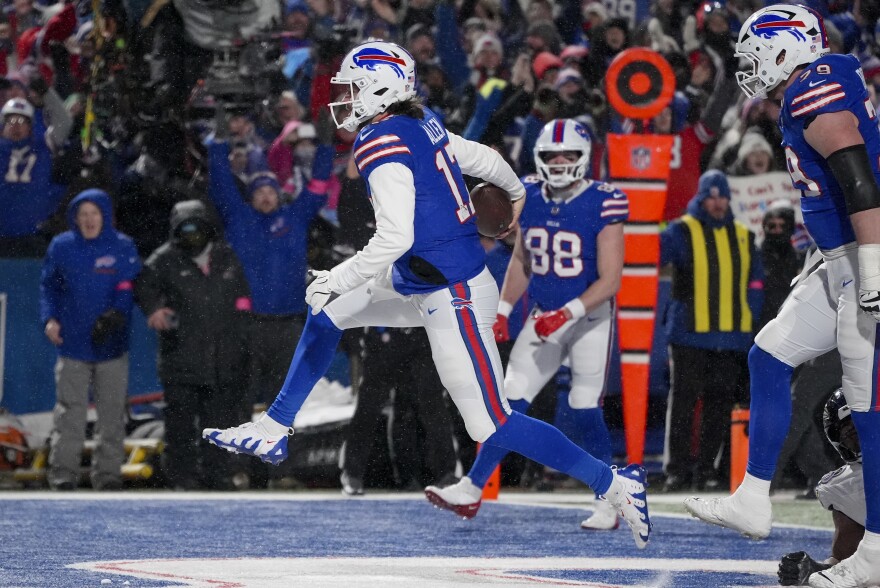
As the 2025 NFL season draws near, few divisions carry as much intrigue as the AFC East—a battleground long defined by bitter rivalries, marquee moments, and sustained power at the top. What was once the domain of a single dynasty has evolved into a tightly contested four-team race, with each franchise crafting a new narrative amid offseason reshuffling and rising expectations. In Buffalo, 2024 NFL MVP Josh Allen remains the cornerstone of a franchise undergoing key transitions, holding on to hopes of extending its championship window with several returning core players and new contributors—ranging from proven veterans on offense to emerging young talent on defense. Miami, meanwhile, looks to strike balance between its explosive offense and a defense led by somewhat seasoned leadership, striving for consistency and better health in a season defined by urgency and high expectations. Up in Foxborough, the Patriots have fully embraced a cultural and roster overhaul under Mike Vrabel and second-year quarterback Drake Maye, continuing to invest in foundational growth while seeking meaningful short-term progress. And in New York, the Jets turn the page with first-year head coach Aaron Glenn and newly acquired quarterback Justin Fields, aiming to forge a new identity after years of instability and unfulfilled potential. With quarterback arcs unfolding, coaching philosophies colliding, and divisional supremacy up for grabs, the AFC East sets the stage for a season rich with drama and possibility. Let’s dive into how each team stacks up in a division where the margin for error has never been smaller:
—————————————————————————————————————————————
Buffalo Bills
9/7 – vs. Ravens – Win
9/14 – @ Jets – Win
9/18 – vs. Dolphins – Win
9/28 – vs. Saints – Win
10/5 – vs. Patriots – Win
10/13 – @ Falcons – Loss
10/19 – BYE
10/26 – @ Panthers – Win
11/2 – vs. Chiefs – Loss
11/9 – @ Dolphins – Win
11/16 – vs. Buccaneers – Win
11/20 – @ Texans – Loss
11/30 – @ Steelers – Win
12/7 – vs. Bengals – Win
12/14 – @ Patriots – Win
12/21 – @ Browns – Win
12/28 – vs. Eagles – Loss
1/4 – vs. Jets – Win
Final Record: 13-4
As the season inches closer, the Buffalo Bills find themselves straddling the line between continuity and transformation. Still led by head coach Sean McDermott, the franchise enters a new era with a refined identity, one shaped by a front office that refuses to settle and a coaching staff determined to raise the ceiling that has capped previous postseason runs. Offensive coordinator Joe Brady returns to guide an offense built around tempo, motion, and balance, and newly promoted defensive coordinator Bobby Babich brings a modern edge to the team’s 4-2 base alignment, aiming to weaponize versatility and speed to counter the AFC’s elite firepower. The Bills may look familiar on paper, but beneath the surface, they’ve undergone the kind of intelligent retooling that championship teams often require.
The Bills’ offense remains centered around reigning MVP Josh Allen. While he might not have the big-name weapons that defined earlier iterations of this unit, he now leads a deep, versatile group of pass-catchers and runners built for multiplicity and matchup nightmares. Dynamic threats like Khalil Shakir and Curtis Samuel provide savvy route-running and positional flexibility, while second-year wideout Keon Coleman has the tools and maturity to emerge as Buffalo’s future WR1. Steady free-agent additions Joshua Palmer, Elijah Moore, and Laviska Shenault give the Bills one of the more complete receiver rooms in the league, even if it lacks household names. At tight end, Dalton Kincaid and Dawson Knox continue to evolve as dual threats in Brady’s play-action-heavy scheme. James Cook returns as the lead back, joined by Ty Johnson and rookie Ray Davis, forming a trio built more on quickness and vision than brute power. Up front, Dion Dawkins and Spencer Brown anchor the tackle positions, while the interior line features fierce competition between veterans Connor McGovern and David Edwards, alongside newcomers like Kendrick Green and second-year talent Sedrick Van Pran-Granger. It’s not a glamorous group—but it’s tough, cohesive, and built to let Allen do what he does best: improvise, attack space, and command tempo.
However, the Bills’ identity may have shifted the most on the defensive side of the ball and for good reason. The team brought in former Chargers All-Pro Joey Bosa to supercharge a pass rush that had grown stagnant at times. He joins Greg Rousseau and AJ Epenesa to form a three-headed edge threat, with rotational newcomer Michael Hoecht adding physicality and flexibility. Inside, Ed Oliver and DaQuan Jones are supported by free-agent signing Larry Ogunjobi and high-upside rookie Deone Walker, giving Buffalo legitimate muscle up front. At linebacker, the return of Matt Milano provides a major emotional and tactical boost. Terrel Bernard and Dorian Williams are expected to continue in full-time roles, while veteran pickup Shaq Thompson adds leadership and quality depth. In the secondary, Tre’Davious White returns to the fold after a stint in Baltimore, rejoining a young group headlined by Christian Benford and rookie Maxwell Hairston. The nickel spot remains in the steady hands of Taron Johnson, while the safety room has quietly become one of the league’s most competitive. Taylor Rapp, Cole Bishop, and Damar Hamlin are all back, each offering distinct coverage skills and downhill instincts. Despite losing names like Von Miller, Rasul Douglas, and Jordan Phillips, this defense feels younger, faster, and, under Babich, more aggressive.
Buffalo’s 2025 schedule won’t allow for a slow start or early growing pains. The season opens with a Sunday Night Football showdown against Lamar Jackson and the defending AFC North champion Ravens, followed by a Week 2 trip to face the Jets and a Week 3 Thursday night clash with Miami—three games that could set the tone for the year. The midseason slate includes matchups against the Chiefs and Eagles, plus tricky road tests in Foxborough, Pittsburgh, and Houston. A mid-October bye offers a timely reset after a grueling six-game stretch featuring four prime-time appearances. These aren’t just high-stakes contests—they’re measuring sticks that will test the Bills’ depth, cohesion, and competitive resolve in a loaded AFC.
Yet through it all, there’s a renewed energy around this Buffalo team rooted not in hype, but in humility. After years of heartbreak and sky-high expectations, this group feels more grounded. Josh Allen remains the emotional heartbeat, now flanked by seasoned leaders like Milano, Dawkins, and White, all of whom understand how thin the line is between falling short and finishing the job. The coaching staff has made bold, strategic tweaks, and the front office has prioritized players who fit the franchise’s evolving identity. This may not be the most headline-grabbing roster Buffalo has fielded, but it might be the most equipped to handle the grind of January. All things considered, I think they’ll stay consistent in a strong way with a 13-4 regular-season finish. This isn’t just a playoff team. It’s a balanced, veteran-savvy, and creatively schemed contender with every intention of making the final leap. If Allen continues playing like an MVP and the defense gels under Babich’s guidance, the Bills could finally shatter the ceiling and bring a Lombardi Trophy to Western New York.
—————————————————————————————————————————————
Miami Dolphins
9/7 – @ Colts – Loss
9/14 – vs. Patriots – Win
9/18 – @ Bills – Loss
9/29 – vs. Jets – Win
10/5 – @ Panthers – Win
10/12 – vs. Chargers – Win
10/19 – @ Browns – Loss
10/26 – @ Falcons – Loss
10/30 – vs. Ravens – Loss
11/9 – vs. Bills – Loss
11/16 – vs. Commanders (in Madrid, Spain) – Loss
11/23 – BYE
11/30 – vs. Saints – Win
12/7 – @ Jets – Loss
12/15 – @ Steelers – Loss
12/21 – vs. Bengals – Loss
12/28 – vs. Buccaneers – Win
1/4 – @ Patriots – Loss
Final Record: 6-11
The Miami Dolphins are once again at a familiar crossroads they’ve faced in recent years: they’re talented and tantalizing, yet walking the tightrope of “what if?” Head coach Mike McDaniel returns for his fourth season, still pushing the envelope with his creative offensive design. Alongside him, offensive coordinator Frank Smith continues to deploy his unique 21-personnel packages, including two backs, one tight end, and motion-heavy sequencing that relies on speed, angles, and timing. On the other side of the ball, coordinator Anthony Weaver begins his second season in Miami, instilling a base 3-4 scheme designed to bring flexibility and toughness to a group in need of both. For a team that once buzzed with playoff aspirations, the focus has shifted to cohesion, health, and discovering an identity that can endure.
Offensively, everything starts once again with quarterback Tua Tagovailoa, whose precision and timing, when healthy, fuel McDaniel’s system like few others can. But after yet another season interrupted by injuries, Miami added reinforcements behind him: former Jets and Broncos quarterback Zach Wilson and rookie Quinn Ewers, who arrives with first-round tools and a long-term development plan. The Dolphins didn’t stop there, stockpiling running backs like a team preparing for a long winter. De’Von Achane returns with Jaylen Wright as the new spark plug following Raheem Mostert’s departure, while new additions such as Alexander Mattison, Ollie Gordon II, and Nate Noel provide a mix of speed, power, and depth. Fullback Alec Ingold remains the heartbeat of Miami’s old-school backfield looks, bringing grit and leadership. Wideouts Tyreek Hill and Jaylen Waddle still set the standard for explosiveness, but depth will be crucial. Nick Westbrook-Ikhine adds veteran size to a crowded WR3 battle, while rookies Andrew Armstrong, Theo Wease Jr., and AJ Henning inject fresh energy. At tight end, Darren Waller comes out of retirement with star potential, though health remains the wildcard, while Pharaoh Brown and rookie Jalin Conyers offer scheme versatility and additional depth. Up front, Miami added steady Steelers guard James Daniels and versatile swingman Larry Borom to help stabilize a line that includes Austin Jackson and promising rookie Jonah Savaiinaea.
While the offensive talent is undeniable and continuity remains elusive, the defense is where the transformation feels most dramatic. Weaver’s system gives Miami a fresh identity, beginning up front with Zach Sieler and rookie Kenneth Grant, a mammoth out of Michigan expected to plug gaps and eat space. Matthew Butler and Benito Jones round out the rotation, with rookies Jordan Phillips and Zeek Biggers pushing to earn snaps. On the edges, Jaelan Phillips and Bradley Chubb, both returning from injury, could form a fearsome duo if healthy, while Chop Robinson brings an electric first-step burst that continues to draw rave reviews from coaches. The linebacker group is full of intrigue: Jordyn Brooks and Tyrel Dodson man the interior, but the outside is where Miami invested heavily, adding Willie Gay Jr. from New Orleans and K.J. Britt from Tampa Bay for their range and aggression. The secondary, stripped of Jevon Holland and Jalen Ramsey, was rebuilt on the fly. Minkah Fitzpatrick’s homecoming from Pittsburgh gives the group a foundational anchor, while Ifeatu Melifonwu and Ashtyn Davis bring flexibility and veteran savvy. At corner, Cam Smith and Kader Kohou lead a youthful group, while rookie Jason Marshall Jr. competes with Storm Duck, Artie Burns, and Kendall Sheffield in a wide-open battle. This defense is younger, faster, and full of moving parts, but it’s also just one injury away from unraveling.
The schedule? It offers no favors. Miami opens with its divisional foes early, including a Thursday night matchup in Buffalo and a Monday night home matchup against the Jets. A midseason grind follows with Ravens visiting on a Monday night and the Bills the following week, and they also have trips to Carolina and Atlanta before travelling Europe to face Washington in Madrid. December doesn’t get easier, featuring clashes with the Steelers on a Monday night in Pittsburgh and the Bengals at home on Sunday Night Football, and they then finally wrap up their regular season against the Patriots in frigid Foxborough.
Miami’s offense might still light up the scoreboard on any given day, but questions at quarterback, inconsistency along the offensive line, and a defense adjusting to a new system spell volatility. Their offseason wasn’t just about plugging holes, but it was instead about shifting the tone. The additions of Fitzpatrick, Daniels, and Wilson weren’t merely depth moves; they were made with locker room leadership in mind. Still, the turnover is noticeable. Gone are leaders and contributors like Mostert, Ramsey, Holland, and possibly Jordan Poyer, which are guys who understood how to win ugly. That void is real, and the Dolphins will need their young players to mature quickly. The coaching staff appears to understand the long game, but patience wears thin quickly in a division as relentless as the AFC East. In the end, this version of the Dolphins is still searching for its best self. There’s no shortage of playmakers, and the coaching minds remain among the league’s sharpest. But in a conference that deepens every year, the margin for error has all but disappeared. Injuries, instability, and a brutal schedule suggest that this could be more of a transitional season than a competitive one. A 6-11 finish might sting, but it could also lay the groundwork for a stronger, more complete Dolphins team in 2026.
—————————————————————————————————————————————
New England Patriots
9/7 – vs. Raiders – Win
9/14 – @ Dolphins – Loss
9/21 – vs. Steelers – Win
9/28 – vs. Panthers – Loss
10/5 – @ Bills – Loss
10/12 – @ Saints – Win
10/19 – @ Titans – Loss
10/26 – vs. Browns – Win
11/2 – vs. Falcons – Win
11/9 – @ Buccaneers – Loss
11/13 – vs. Jets – Win
11/23 – @ Bengals – Loss
12/1 – vs. Giants – Loss
12/7 – BYE
12/14 – vs. Bills – Loss
12/21 – @ Ravens – Loss
12/28 – @ Jets – Loss
1/4 – vs. Dolphins – Win
Final Record: 7-10
The 2025 season opens a new chapter for the New England Patriots as former player Mike Vrabel steps in as head coach, bringing fresh energy to a franchise eager to reclaim its winning ways. His offensive support system is headlined by offensive coordinator Josh McDaniels, who returns to his trusted 11-personnel scheme emphasizing balance and efficiency tailored to the talents of the team’s second-year quarterback. On defense, Terrell Williams installs a base 3-3 alignment designed for aggression and versatility, blending the grit of seasoned veterans with the hunger of younger players eager to make their mark. This is the most cohesive staff the Patriots have had since Bill Belichick’s departure, and while a full return to former glory may not happen this season, it’s a group capable of laying that foundation for the future.
At the helm, Drake Maye carries the hopes of a franchise looking to develop its next franchise quarterback, with veteran Josh Dobbs offering a steadying presence behind him. The rushing attack centers around Rhamondre Stevenson, a powerful, versatile back who shares duties with explosive rookie TreVeyon Henderson and dual-threat Antonio Gibson, creating a multi-dimensional ground game. The passing game received a major boost with the arrival of Stefon Diggs from Houston, whose playmaking ability instantly elevates the receiving corps. Supporting Diggs are steady veterans Mack Hollins and Kendrick Bourne, along with a youthful, dynamic rotation including Ja’Lynn Polk, rookie Kyle Williams, and Javon Baker all competing for snaps. DeMario Douglas continues to offer reliability in the slot, while Kayshon Boutte has the potential to add a spark if he can stay healthy and focused off the field. Tight ends Hunter Henry and Austin Hooper provide reliable targets over the middle. The offensive line, which is key to Maye’s development, blends promising youth and veteran experience: first-round rookie Will Campbell anchors the left tackle spot, flanked by Brock Lampe, Cole Strange, Mike Onwenu, and newly signed veterans Garrett Bradbury from Minnesota and Morgan Moses from New York, whose leadership brings added stability. Depth from Vederian Lowe, Sidy Sow, Jared Wilson, Layden Robinson, and Caedan Wallace ensures the group can withstand the rigors of a long season.
Defensively, the Patriots boast a front seven built to disrupt and pressure opposing offenses. Keion White leads a defensive line that pairs Christian Barmore with Milton Williams, a high-motor addition from Philadelphia. Rookies Joshua Farmer and Jahvaree Ritzie provide valuable depth as the team transitions from the departure of Davon Godchaux to New Orleans. On the edge, the addition of Harold Landry III from Tennessee brings veteran pass-rushing prowess, joined by Anfernee Jennings and rotational players Bradyn Swinson and K’Lavon Chaisson—a former Raider looking to revitalize his career. Linebacker duties are handled by rugged Robert Spillane, who signed from Las Vegas, and Christian Elliss, with Jack Gibbens and Jahlani Tavai providing dependable depth. The secondary may be without longtime veteran Jonathan Jones, but the cornerback trio of the lengthy Christian Gonzalez, speedy Marcus Jones, and lockdown newcomer Carlton Davis III from the Lions offers promise. Backups Marcellas Dial Jr., Alex Austin, and Isaiah Bolden add youthful depth. Safeties Jabrill Peppers and Kyle Dugger anchor the back end, while Craig Woodson, free-agent signee Marcus Epps, and Jaylinn Hawkins provide additional versatility.
New England’s schedule will test its growth and resilience at every turn. The season kicks off with a home matchup against the Raiders, followed by a road trip to Miami and back-to-back home games against the Steelers and Panthers. The Patriots face several primetime challenges, including Sunday Night Football in Buffalo and road trips to New Orleans and Tennessee. Midseason brings home games versus Cleveland and Atlanta before traveling to Tampa Bay. Divisional showdowns intensify down the stretch, with Thursday Night Football against the Jets and Monday Night Football versus the Giants. After a late bye week, the Patriots face Buffalo and Baltimore back-to-back before closing the season with road trips to New York and a home finale against Miami.
The grind of this schedule demands consistent improvement, depth, and resilience from a young roster still finding its identity. With a rookie quarterback leading a mix of promising talent and experienced veterans on both sides of the ball, New England is poised for gradual progress. While growing pains are inevitable, the combination of McDaniels’ proven offensive strategy, Williams’ aggressive defense, and Vrabel’s leadership provides a strong foundation. The Patriots should be competitive and capable of pulling off key wins, with an 7-10 record a realistic record for 2025. This season will be a crucial stepping stone as the Patriots work to reestablish themselves as contenders in the AFC.
—————————————————————————————————————————————
New York Jets
9/7 – vs. Steelers – Loss
9/14 – vs. Bills – Loss
9/21 – @ Buccaneers – Loss
9/29 – @ Dolphins – Loss
10/5 – vs. Cowboys – Win
10/12 – vs. Broncos (in London, UK) – Loss
10/19 – vs. Panthers – Win
10/26 – @ Bengals – Loss
11/2 – BYE
11/9 – vs. Browns – Win
11/13 – @ Patriots – Loss
11/23 – @ Ravens – Loss
11/30 – vs. Falcons – Loss
12/7 – vs. Dolphins – Win
12/14 – @ Jaguars – Loss
12/21 – @ Saints – Loss
12/28 – vs. Patriots – Win
1/4 – @ Bills – Loss
Final Record: 5-12
The 2025 NFL season signals a transformative new era for the New York Jets, one defined by a renewed sense of direction and identity under first-time head coach Aaron Glenn. A former defensive coordinator in Detroit, Glenn brings an assertive, high-energy leadership style to a franchise desperate to escape the shadow of inconsistency and squandered potential. His vision for the Jets is both bold and forward-thinking, especially evident in his choice of coordinators. Offensively, Glenn handed the reins to Tanner Engstrand, an innovative mind who crafted Detroit’s dynamic, motion-heavy 11-personnel offense. That same scheme now becomes the platform for their dual-threat quarterback to operate in. On defense, veteran strategist Steve Wilks steps in to install a flexible 4-2 base loaded with hybrid packages and aggressive fronts, a perfect fit for Glenn’s physical, disruptive philosophy. While the overhaul won’t yield instant results, it lays the groundwork for a cultural reset in Florham Park.
On offense, New York enters 2025 with a roster teeming with potential, yet equally dependent on how quickly it can gel. Justin Fields, acquired from Pittsburgh, steps into the spotlight as the team’s new starting quarterback, hoping to fulfill his promise in a system that fits his strengths, and Tyrod Taylor adds veteran stability behind him. In the backfield, Breece Hall remains the engine of the attack, while bruising rookie Braelon Allen brings complementary thunder to Hall’s lightning. Wide receiver Garrett Wilson continues to serve as the offense’s go-to weapon, with free-agent additions Josh Reynolds and Tyler Johnson providing big-bodied targets, particularly in the red zone. Rookie Arian Smith offers track speed on the perimeter, while the slot is a battleground for reps between Allen Lazard, gadget threat Xavier Gipson, and rookies Malachi Corley and Mason Taylor. Taylor, a tight end out of LSU, is poised to play a pivotal role in Engstrand’s offense, sharing snaps with Jeremy Ruckert in a system that leans heavily on tight end versatility. The offensive line, though revamped, must prove it can protect. 2024 first-rounder Olu Fashanu anchors the left side, flanked by veterans John Simpson and Alijah Vera-Tucker, with Joe Tippmann at center. On the right, a battle brews between rookies Armand Membou and Chukwuma Okorafor, while Josh Myers and Xavier Newman bolster the depth chart. The entire operation will hinge on how well Fields can settle into the system and how quickly this reshuffled line can build cohesion.
Defensively, the Jets aim to regain their edge under Wilks’ tutelage. The pass rush is led by promising edge duo Will McDonald IV and Jermaine Johnson, with Michael Clemons and rookie Tyler Baron offering rotational support. On the interior, All-Pro Quinnen Williams anchors a beefed-up line featuring newcomers Derrick Nnadi and Jay Tufele, plus developmental pieces like Leonard Taylor III and Phidarian Mathis. At linebacker, emotional leader Quincy Williams returns to set the tone, joined by Jamien Sherwood and rookie Francisco Mauigoa, who may see his role grow as the season unfolds. In the secondary, the departure of several veterans ushers in a new-look unit. Sauce Gardner remains the centerpiece on the outside, while Michael Carter II solidifies the nickel. Former Raven Brandon Stephens slides into the other outside corner spot, bringing physicality and versatility. At safety, Andre Cisco, who signed from Jacksonville, partners with Tony Adams, while rookie Malachi Moore adds chess-piece flexibility in sub-packages, and veteran depth from Isaiah Oliver and Kris Boyd helps plug holes, but growing pains are inevitable in such a retooled secondary.
The 2025 schedule offers few soft landings for a Jets team in the midst of a rebuild. They open with back-to-back home games against two physical opponents in the Steelers and Bills that will immediately challenge their new-look roster. Road trips to face all three Florida teams follow soon after, including a Monday Night Football divisional clash with the Dolphins in late September. An early October trip to London against the Broncos presents an early-season curveball, before the Jets return home for winnable matchups against the Panthers and Cowboys. After a midseason bye, the stretch run ramps up with road visits to New England, Baltimore, and Buffalo, which are three meaningful opponents in hostile environments that will test the team’s growth and resilience.
For all the optimism surrounding Glenn’s arrival, this season will be less about wins and more about vision. The offense, despite its talent infusion, remains a work-in-progress, with Fields needing time to adapt and the offensive line still unproven. The defense may take strides, especially in the front seven, but a patchwork secondary and general youth across the roster suggest uneven results. What fans can expect is a grittier, tougher Jets team: one defined by effort, creativity, and long-term ambition. They’re not there yet, and 2025 will reflect that with an expected 5-12 finish. Still, for a team that’s wandered through years of dysfunction, the direction finally feels like it could be the right one.
Stay tuned later this weekend as I release my AFC West preview to cap off the first half of my predictions!


 The Clutch Index
Leave a comment