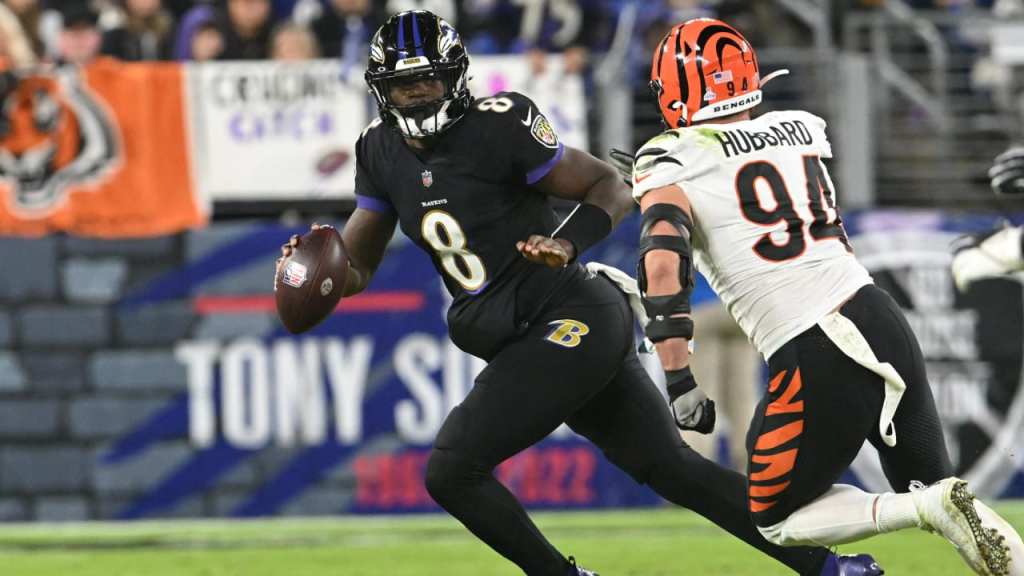
The upcoming NFL season is now right around the corner, and teams across the league are gearing up for what promises to be another unpredictable and highly competitive year. From surging powerhouses looking to maintain their dominance to retooling rosters aiming to spark a new identity, every division brings its own compelling storylines. The AFC North is no exception, as it features a Super Bowl contender in Baltimore, a resurgent Pittsburgh team, a talented but inconsistent Cincinnati squad, and a Cleveland franchise that’s still trying to find its rhythm. The Ravens return with a battle-tested roster and MVP-caliber play from Lamar Jackson, aiming to finish what they started last postseason. The Steelers, under Mike Tomlin, plan to continue their elite defensive play but hope to change their identity offense with plenty of veteran experience blending in with their emerging youth in order to recapture their long-tenured winning identity. The Bengals, still led by Joe Burrow, have as much offensive firepower as they can get, but they need their newly revamped defensive staff to continue developing their young talent on that side of the ball. And the Browns, while strong on paper, are seeking continuity and a spark from their veteran core to stay afloat in one of the NFL’s toughest divisions. This series will preview and predict how each AFC North team is expected to perform, taking into account offseason acquisitions, roster adjustments, coaching dynamics, and schedule difficulty. As the journey to Super Bowl LX begins, we’ll analyze who’s trending upward, who might take a step back, and what to expect from all four teams in the AFC North:
—————————————————————————————————————————————
Baltimore Ravens
9/7 – @ Bills – Loss
9/14 – vs. Browns – Win
9/22 – vs. Lions – Win
9/28 – @ Chiefs – Win
10/5 – vs. Texans – Win
10/12 – vs. Rams – Win
10/19 – BYE
10/26 – vs. Bears – Win
10/30 – @ Dolphins – Win
11/9 – @ Vikings – Win
11/16 – @ Browns – Win
11/23 – vs. Jets – Win
11/27 – vs. Bengals – Win
12/7 – vs. Steelers – Win
12/14 – @ Bengals – Win
12/21 – vs. Patriots – Win
12/27-28 – @ Packers – Loss
1/4 – @ Steelers – Loss
Final Record: 14-3
With John Harbaugh entering his 18th season at the helm, the Baltimore Ravens return in 2025 with the swagger of a franchise that knows exactly who it is—and how dangerous it can be. The foundation remains firmly in place: a battle-tested coaching staff, a franchise quarterback playing at an MVP level, and a deep, disciplined roster built to win now. Offensively, coordinator Todd Monken is sharpening his vision, adding new dimensions to his already potent scheme with an increased emphasis on 21 personnel (2 RB, 1 TE), featured on 29% of plays. It’s a clear signal that Baltimore plans to impose its will physically, punish defenses with misdirection and power, and weaponize play-action through layered route concepts. Defensively, the torch has been passed to former linebackers coach Zach Orr, who inherits the coordinator title along with a war chest of versatile defenders. His Base 3–4 Over front will preserve the Ravens’ traditional identity—tough, creative, and opportunistic—while infusing fresh perspective from within.
At the center of it all is Lamar Jackson, who continues to redefine what it means to be a dual-threat quarterback. With a second MVP under his belt and complete command of Monken’s playbook, Jackson enters 2025 with perhaps his most balanced supporting cast yet. The Ravens made headlines by signing former Chiefs wideout DeAndre Hopkins, giving Jackson a reliable, high-IQ target to pair with the explosiveness of slot receiver Zay Flowers and the untapped potential of Rashod Bateman. On the ground, bruising veteran Derrick Henry joins the fold to form a thunder-and-lightning backfield alongside Justice Hill and the always-reliable Patrick Ricard. Tight ends Mark Andrews and Isaiah Likely remain central to Baltimore’s offensive identity, with Andrews still the heartbeat of the passing game and Likely a strong rising talent. Up front, the offensive line blends proven anchors like Ronnie Stanley and Tyler Linderbaum with younger maulers in Andrew Vorhees, Daniel Faalele, and Roger Rosengarten—forming a cohesive unit ready to pave the way.
The Raven defense may boast one of the most complete units in the NFL. Zach Orr’s front is anchored by the disruptive trio of Broderick Washington, Travis Jones, and former All-Pro Nnamdi Madubuike, a group capable of collapsing pockets and bottling run lanes. Behind them, Roquan Smith continues to play at an elite level, now flanked by an explosive, rangy Odafe Oweh, ascending third-year player Trenton Simpson, and savvy veteran Kyle Van Noy. The secondary underwent a transformation this offseason but emerged stronger, deeper, and more dynamic. The additions of All-Pro Jaire Alexander and Chidobe Awuzie bolster a cornerback room that already included Marlon Humphrey and former first-round pick Nate Wiggins. The back end is patrolled by versatile playmaker Kyle Hamilton and electric rookie Malaki Starks, offering Orr unmatched flexibility in disguising coverages and countering modern passing attacks.
The Ravens’ 2025 schedule is a gauntlet by any measure, but it’s also a showcase. They open on Sunday Night Football in Buffalo and face early home tests against the Browns and Lions (on Monday Night Football), followed by a heavyweight road clash with Kansas City in Week 4. After a midseason bye, the Ravens enter a brutal stretch that includes road games in Miami (on Thursday Night Football), Minnesota, and Cleveland, and pivotal AFC matchups against the Jets, Bengals (on Thanksgiving night), and Steelers. The final month features three away games—including potential cold-weather battles in Cincinnati, Green Bay, and Pittsburgh. It’s a demanding slate, but one that this veteran-laden roster is built to survive.
Few teams in the NFL combine high-end star power with organizational stability the way the Ravens do. With Jackson healthy, Henry adding a bruising edge to the run game, and Monken’s offense continuing to evolve, Baltimore is poised to be even more dangerous with the ball. Meanwhile, Zach Orr’s elevation ensures continuity on defense, while unlocking the creative potential of a unit brimming with Pro Bowl-caliber talent. The road won’t be easy, but the Ravens have the leadership, depth, and toughness to handle it. I’m seeing a 14–3 finish, a first-round bye, and a firm place among the AFC’s elite out of this Baltimore squad—a team with Super Bowl ambitions and the roster to chase them down.
—————————————————————————————————————————————
Cincinnati Bengals
9/7 – @ Browns – Win
9/14 – vs. Jaguars – Win
9/21 – @ Vikings – Loss
9/29 – @ Broncos – Loss
10/5 – vs. Lions – Win
10/12 – @ Packers – Loss
10/16 – vs. Steelers – Win
10/26 – vs. Jets – Win
11/2 – vs. Bears – Win
11/9 – BYE
11/16 – @ Steelers – Loss
11/23 – vs. Patriots – Win
11/27 – @ Ravens – Loss
12/7 – @ Bills – Loss
12/14 – vs. Ravens – Loss
12/21 – @ Dolphins – Win
12/27-28 – vs. Cardinals – Win
1/4 – vs. Browns – Win
Final Record: 10-7
Entering the 2025 season, the Cincinnati Bengals carry a powerful blend of restored health, refreshed ambition, and a hunger to reclaim their position as AFC North contenders. Head coach Zac Taylor embraces subtle innovation on offense, leaning on offensive coordinator Dan Pitcher’s second year to sustain their spread-heavy identity. With 11-personnel (1 RB, 1 TE) sets comprising 57% of snaps, this system thrives on tempo, spacing, and Burrow’s rapid reads. Defensively, Al Golden, newly installed as coordinator, shifts to a base 4‑2 structure, prioritizing linebacker speed, disciplined gap control, and flexible safety rotations in lieu of Lou Anarumo’s more disguised packages. Despite departures of key contributors, a series of smart offseason moves—both free-agent additions and emerging internal talent—keep the Bengals on course.
Cincinnati’s offense remains one of the most dynamic units in professional football, and with Joe Burrow coming off of a season where he finished as the NFL’s leading passer, it helps being able to resign the NFL’s fifth-ever Triple Crown winner in Ja’Marr Chase as well as one of the best number-two options in football in Tee Higgins, a duo that’s one of the best in the league Another hope is that Cincinnati continues to see even more development and production out of rising standout Andrei Iosivas as their third option. The addition of Mike Gesicki infuses vertical athleticism into the tight end group, supported situationally by Tanner Hudson and Drew Sample. A revamped backfield centers on Chase Brown, but rotating Zach Moss, a returning Samaje Perine, and possibly even rookie Tahj Brooks offers a great blend of diverse rushing styles in the backfield. The offensive line, retooled to address the losses of Alex Cappa and Trent Brown, now features Lucas Patrick and former Georgia Bulldog Dylan Fairchild alongside stalwarts Orlando Brown Jr., Ted Karras, and Amarius Mims—intent on giving Burrow even more time to unlock the offense’s full potential.
Defensively, Golden inherited a unit loaded with upside—and new faces poised to contribute immediately. If his holdout is resolved, Trey Hendrickson will anchor the pass rush alongside breakout candidate Joseph Ossai, veteran DT BJ Hill, and newcomer TJ Slaton Jr. from Green Bay. First-round draft pick Shemar Stewart is another player who, while he wasn’t necessarily a stat-padder in college, adds plenty edge depth, but he also is in the middle of a contract dispute with the Bengals’ front office with only time telling where he’ll ultimately be on the team’s final 53-man roster by the start of the season. At linebacker, Logan Wilson remains the cerebral anchor beside either Demetrius Knight or free-agent signee Oren Burks, following the departures of Germaine Pratt and Akeem Davis-Gaither. The secondary sees a youth movement in action: Cam Taylor-Britt, DJ Turner II, and rookie Josh Newton replace the unsigned Mike Hilton, while the safety trio of Dax Hill, Geno Stone, and Jordan Battle brings both versatility and range. Though Sheldon Rankins’ interior presence is missed, a deep developmental pipeline gives this defense room to grow.
Cincinnati’s 2025 schedule is built for drama. They open the regular season in Cleveland—setting an early tone in the AFC North—before hosting strong opponents like the Jaguars and Lions. Back-to-back road tests in Minnesota and Denver (a Monday Night Football showdown) will challenge their resilience early. A Thursday night clash in primetime with the Steelers follows a physical mid-season stretch, after which the Bengals face a grueling slate—including trips to Buffalo and Baltimore on Thanksgiving, a Sunday night showdown in Miami, and ultimately a season finale at home against the Browns that could decide playoff destiny.
The formula for success is straightforward: stay healthy, protect Burrow, and deliver on both sides of the ball. Pitcher’s offense flourishes when it retains tempo and spacing, while Golden’s defense must mesh quickly and generate consistent pressure beyond Hendrickson. While losing leaders like Germaine Pratt and possibly Mike Hilton is no small matter, rising stars such as Battle, Turner, and Newton could transform that void into strength. Ultimately, the Bengals are poised to rebound in 2025. With a franchise quarterback in his prime, an elite receiving corps, and a defensive front and secondary built for speed and disruption, I’d say 10–7 finish seems pretty realistic—giving them a strong path back into the postseason as a Wild Card team.
—————————————————————————————————————————————
Cleveland Browns
9/7 – vs. Bengals – Loss
9/14 – @ Ravens – Loss
9/21 – vs. Packers – Loss
9/28 – @ Lions – Loss
10/5 – vs. Vikings (in London, UK) – Loss
10/12 – @ Steelers – Loss
10/19 – vs. Dolphins – Win
10/26 – @ Patriots – Loss
11/2 – BYE
11/9 – @ Jets – Loss
11/16 – vs. Ravens – Loss
11/23 – @ Raiders – Loss
11/30 – vs. 49ers – Win
12/7 – vs. Titans – Win
12/14 – @ Bears – Loss
12/21 – vs. Bills – Loss
12/28 – vs. Steelers – Loss
1/4 – @ Bengals – Loss
Final Record: 3-14
After a season full of disappointments and letdowns, the Cleveland Browns enter this upcoming season with more questions than answers as they navigate another year of instability at the quarterback position and attempt to stay competitive in a loaded AFC North. Head coach Kevin Stefanski remains at the helm, but his job security has grown tenuous after consecutive underwhelming seasons. The Browns hired Tommy Rees as their new offensive coordinator in hopes of revitalizing an inconsistent offense. Rees brings a modern pro-style scheme that leans heavily on 11 personnel (1 RB, 1 TE, 3 WR) in 75% of sets, designed to spread defenses horizontally and create opportunities in the intermediate passing game. On defense, Jim Schwartz returns as defensive coordinator, continuing to implement his aggressive Base 4-3 system that thrives on pressure from the front four. However, Cleveland’s offseason was defined more by uncertainty and roster turnover than cohesion.
Offensively, the Browns are without Deshaun Watson, who remains sidelined due to injury, leaving the team with a quarterback competition between incoming veterans Joe Flacco and Kenny Pickett, as well as rookies Dillon Gabriel and Shedeur Sanders. None of these options inspire confidence as long-term solutions, and their performance in Rees’ system will determine how functional the offense can be. The running back room also looks different with Nick Chubb now in Houston and D’Onta Foreman, Nyheim Hines, and others no longer on the roster. The team will rely on Jerome Ford and the rookie combo of power-back Quinshon Judkins and speedster Dylan Sampson to carry the load. The receiving corps added veteran Diontae Johnson to join Jerry Jeudy and Cedric Tillman, with rotational reps likely for Jamari Thrash and David Bell. Tight end David Njoku remains a key target, with Harold Fannin Jr. emerging as a developmental prospect. Cleveland’s offensive line—led by Joel Bitonio, Wyatt Teller, and Ethan Pocic—remains solid on paper, though injuries to Jack Conklin and the departure of James Hudson III could test the unit’s depth.
The Browns’ defense still boasts elite-level talent, particularly up front with Myles Garrett, who continues to play at a Defensive Player of the Year level. He’s joined by rising rusher Isaiah McGuire, free agent addition Maliek Collins from San Francisco, and Mason Graham, a standout rookie from Michigan that the Browns selected after trading down in the NFL Draft to form a formidable defensive line. The linebacking unit has been hit hard with the loss of Jeremiah Owusu-Koramoah to injury, but veteran Jordan Hicks and former Tennessee Titan Jerome Baker will be key in stabilizing the middle of the field, with help from younger options like rookie Carson Schwesinger and Mohamoud Diabate. In the secondary, Denzel Ward and Greg Newsome II return as the top corners, though Martin Emerson will rotate in heavily. The safety group includes free-agent additions Damontae Kazee and Rayshawn Jenkins, with Grant Delpit leading the way. The departures of Juan Thornhill, Rodney McLeod Jr., and Mike Ford Jr. have thinned the group’s depth and veteran presence.
Cleveland’s 2025 schedule is one of the more brutal in the NFL. They begin the season at home against the Bengals, immediately followed by a trip to Baltimore. An early international game against the Vikings in London and road matchups against the Lions, Patriots, and Jets create a gauntlet through the first half of the season. After their Week 9 bye, the Browns face even tougher opponents like the 49ers and Bills at home as well as the Dolphins on the road, while closing the season with three divisional games—two against the Steelers and one against the Bengals. Without a stable quarterback and with numerous new starters on both sides of the ball, competing in these matchups will be an uphill battle for a team in transition.
While the Browns have exciting pieces on the defensive line and a few intriguing young weapons on offense, the reality is that this roster feels stuck between a full rebuild and a failed win-now attempt. Tommy Rees may bring fresh ideas to the offense, but without a clear answer at quarterback, the scheme may never reach its full potential. Defensively, Schwartz can only do so much when linebacker depth is depleted and the secondary is adjusting to new personnel. Add in a demanding schedule and a division full of playoff contenders, and Cleveland’s margin for error is razor-thin. With too many questions at quarterback, a defense thinned by roster changes and injuries, and a daunting slate of opponents, I have a feeling that the Cleveland Browns will finish with one of the worst records in the league and maybe inside the top three once again in next year’s NFL Draft. While individual talents like Myles Garrett and Denzel Ward may continue to perform at a high level, the lack of consistency and cohesion across the roster points toward a long, difficult season—one that could lead to significant changes in the front office and coaching staff next offseason.
—————————————————————————————————————————————
Pittsburgh Steelers
9/7 – @ Jets – Win
9/14 – vs. Seahawks – Win
9/21 – @ Patriots – Loss
9/28 – vs. Vikings (in Dublin, Ireland) – Loss
10/5 – BYE
10/12 – vs. Browns – Win
10/16 – @ Bengals – Loss
10/26 – vs. Packers – Loss
11/2 – vs. Colts – Win
11/9 – @ Chargers – Loss
11/16 – vs. Bengals – Win
11/23 – @ Bears – Win
11/30 – vs. Bills – Loss
12/7 – @ Ravens – Loss
12/15 – vs. Dolphins – Win
12/21 – @ Lions – Loss
12/28 – @ Browns – Win
1/4 – vs. Ravens – Win
Final Record: 9-8
The Pittsburgh Steelers have been very busy since the start of the offseason, and to answer the questions that they faced in order to take the next step towards becoming a Super Bowl contender again, they returned and brought in a fascinating mix of veteran leadership and youthful athleticism in one of the most talked-about offseason hauls in the league. Head coach Mike Tomlin, now in his 19th season, looks to guide the team back into playoff contention after consecutive years of middling results. To that end, the Steelers made one of the boldest moves of the offseason by bringing in four-time MVP quarterback Aaron Rodgers, a decision that signals a clear win-now mentality. Paired with new offensive coordinator Arthur Smith, the Steelers will operate out of a system built around 11 personnel (1 RB, 1 TE) on 48% of plays, emphasizing play-action, zone runs, and tight end involvement. On defense, Teryl Austin returns to call a familiar Base 3-4 Under scheme, now loaded with new veteran stars and emerging talent across all three levels.
The offense has struggled mightily ever since Ben Roethlisberger’s retirement, and while having Aaron Rodgers under center for his final NFL season might seem to be a huge boost for the passing game, we need to see it to believe it. We’ve seen guys like Kenny Pickett, Justin Fields, and Russell Wilson come through, but none of them were able to show much of anything. It also doesn’t help Rodgers or the Steelers now that they decided to trade George Pickens to Dallas, but the addition of DK Metcalf from Seattle gives Rodgers a true top weapon on the outside, while Robert Woods brings veteran steadiness and Calvin Austin III adds vertical speed and special teams value. Tight ends will also be crucial in this offense, with Pat Freiermuth and Jonnu Smith playing key roles alongside rotational threats like Darnell Washington and Connor Heyward. The command that Aaron Rodgers will have of Smith’s system will be critical in balancing a ground game headlined by Jaylen Warren and supported by versatile backs like Cordarrelle Patterson, Kenneth Gainwell, Trey Sermon, and Iowa rookie Kaleb Johnson, and even though it might hurt the run game not have Najee Harris there any more, the talent is still present there. The offensive line, one of the youngest and most promising in the NFL, features Broderick Jones, Isaac Seumalo, rookies Zach Frazier and Mason McCormick, and first-round pick Troy Fautanu—a group that offers size, athleticism, and long-term upside after the departures of Dan Moore Jr. and Nate Herbig.
Pittsburgh’s defense always seems to be one of the league’s strongest and most complete units, and even with a slightly new look on both the defensive line and secondary, they have the potential to be even deeper this year. The front three of Derrick Harmon, Keeanu Benton, and long-time Steeler Cameron Heyward will be tasked with setting the tone in the trenches, while the edge duo of TJ Watt and Alex Highsmith remains one of the NFL’s most feared. The linebacker room is overflowing with athleticism and experience following the additions of Patrick Queen and Malik Harrison, who join Cole Holcomb, Nick Herbig, and promising rookie Payton Wilson in a highly rotational group. The secondary was overhauled after trading Minkah Fitzpatrick and losing Damontae Kazee and Donte Jackson in free agency, but has emerged stronger on paper. All-Pros Jalen Ramsey and Darius Slay headline the cornerback group, supported by rising star Joey Porter Jr. and slot option Beanie Bishop Jr.. At safety, Juan Thornhill and DeShon Elliott provide veteran versatility, with Miles Killebrew rotating in key sub-packages.
The Steelers’ schedule is both challenging and full of marquee matchups. They open the season on the road against the Jets, where former Steeler Justin Fields now resides, and host the Seahawks in Week 2—a quick revenge opportunity for DK Metcalf. A Week 4 trip to Dublin, Ireland to face the Vikings adds a unique wrinkle before an early bye week. Later in the season, the Steelers face several primetime contests, including a Thursday night showdown at Cincinnati, Aaron Rodgers’ first career game against the Packers on Sunday Night Football, a Sunday-night road matchup against the Chargers, and a Monday night tilt against the Dolphins. Divisional matchups with the Ravens, Bengals, and Browns are sprinkled throughout, with the season ending in a brutal three-week stretch that includes road trips to Detroit and Cleveland, and a home finale against Baltimore. The AFC North remains one of the toughest divisions in football, and every win will be hard-earned.
The success of this team will hinge largely on Aaron Rodgers’ health and performance. If he stays upright and can replicate even a fraction of his Green Bay magic, the offense will be significantly improved from the inconsistent units of the past few years. Arthur Smith’s ability to get the most out of the ground game and tight ends will be pivotal in keeping defenses honest. Meanwhile, Teryl Austin’s defense has the potential to be elite if the veteran secondary gels and the linebacker rotation stays healthy. Tomlin’s steady hand and culture of accountability will be crucial, especially during the midseason gauntlet. Given the improvements across the board, I think the Steelers will be close to the same as last year with a 9-8 record, putting them right on the cusp of making another postseason appearance under Mike Tomlin. The combination of high-end veteran talent and promising young pieces provides a solid foundation, but it may take time for the new additions to fully mesh. If Rodgers can hold his own in his final year and if the defense plays to its potential, Pittsburgh will be a tough out for anyone and could surprise down the stretch.
Stay tuned for tomorrow’s predictions of the AFC South!


 The Clutch Index
Leave a comment