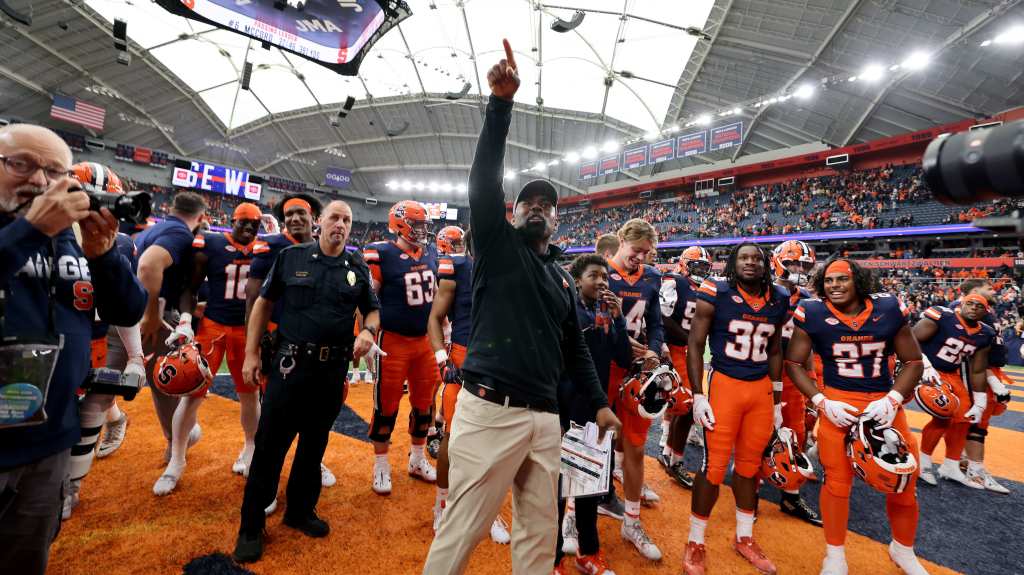
In the ACC, a handful of programs—most notably Clemson and Florida State—have long dominated the spotlight, while many others have struggled to unseat them. But that narrative could be changing. With a wave of new coaching hires and ambitious rebuilds underway, several under-the-radar teams are positioning themselves for a breakthrough. They may not start the season as favorites, but each brings compelling storylines and the potential to make a run toward bowl eligibility—and maybe even challenge for the top half of the conference in 2025. In this article, I’ll reveal the final part of my ACC predictions and previews consisting of the following teams: Stanford, Syracuse, Virginia, Virginia Tech, and Wake Forest.
—————————————————————————————————————————————
Stanford Cardinal
8/23 – @ Hawaii – Loss
8/30 – BYE
9/6 – @ BYU – Loss
9/13 – vs. Boston College – Loss
9/20 – @ Virginia – Loss
9/27 – vs. San José State – Win
10/4 – BYE
10/11 – @ SMU – Loss
10/18 – vs. Florida State – Loss
10/25 – @ Miami – Loss
11/1 – vs. Pittsburgh – Loss
11/8 – @ North Carolina – Loss
11/15 – BYE
11/22 – vs. California – Loss
11/29 – vs. Notre Dame – Loss
Final Record: 1-11 (0-8)
Andrew Luck has returned at Stanford! Well, unfortunately, he won’t be under center this time, but he will be in the front office as the program’s new General Manager. Former NFL head coach Frank Reich has stepped in as the interim head coach while Luck continues the search for a permanent replacement for Troy Taylor. After ending their first ACC season with a disappointing 3–9 record, the Cardinal are looking to reverse a troubling trend that’s seen them suffer at least eight losses in five of the last six seasons.
They promoted tight ends coach Nate Byham to offensive coordinator, and he’ll be turning his attention towards a quarterback battle between Oregon State transfer Ben Gulbranson and sophomore quarterback Elijah Brown. Running backs Micah Ford and Chris Davis Jr. both return to create big plays that they missed last year, but they both need big jumps as former starting quarterback Ashton Daniels made up most of the rushing production as well as backup quarterback Justin Lamson and his other eight rushing touchdowns. They need several offensive lineman to step up in a big way after allowing 39 sacks last season, but the additions out of the portal should help. Their most significant loss is their top offensive star in Elic Ayomanor, which they hope to replace with returning wideout Tiger Bachmeier and transfers CJ Williams from Wisconsin and David Pantellis from Yale, but tight end Sam Roush is back, making his known presence a needed one.
Defensively, continuity comes in the form of third-year coordinator Bobby April III, who faces a tall task in turning around a unit that struggled across the board. Last season, the Cardinal leaned too heavily on their secondary to stop big plays, and while safety Collin Wright—the team’s leading tackler—returns alongside veterans Scotty Edwards and Mitch Sinclair, the cornerback group remains unproven after a difficult year in coverage. The front seven is equally concerning. The loss of star edge rusher David Bailey to Texas Tech leaves Stanford without a true pass-rushing threat, and last season’s defensive line combined for just one sack. Linebackers Matt Rose and Tevarua Tafiti return as the leaders of the defense, but they’ll need to shoulder even more responsibility, especially if the front four can’t generate pressure or stop the run.
Stanford’s schedule doesn’t do them any favors either. A season-opening road trip to BYU kicks things off, followed by challenging ACC road games at SMU, Miami, and North Carolina. The season ends with rivalry showdowns against California and national runner-up Notre Dame.
With significant roster turnover, coaching uncertainty, and a brutal schedule, the Cardinal are likely in for another difficult season. A step back from last year’s mark wouldn’t be surprising as the program enters a full rebuilding phase and continues the search for its long-term leadership.
—————————————————————————————————————————————
Syracuse Orange
8/30 – vs. Tennessee (in Atlanta, GA) – Loss
9/6 – vs. UConn – Win
9/12 – vs. Colgate – Win
9/20 – @ Clemson – Loss
9/27 – vs. Duke – Win
10/4 – @ SMU – Loss
10/11 – BYE
10/18 – vs. Pittsburgh – Win
10/25 – @ Georgia Tech – Loss
10/31 – vs. North Carolina – Win
11/8 – @ Miami – Loss
11/15 – BYE
11/22 – @ Notre Dame – Loss
11/29 – vs. Boston College – Win
Final Record: 6-6 (4-4)
Syracuse’s 2024 season was nothing short of electric. After head coach Fran Brown led the Orange to a ten-win campaign and fundamentally changed the culture of the program in his first year, his second season will focus on building upon that fresh momentum.
Offensive coordinator Jeff Nixon returns after orchestrating one of the nation’s deadliest passing attacks. However, Syracuse faces significant turnover at nearly every skill position. Quarterback Kyle McCord, running back LeQuint Allen Jr., wide receiver Jackson Meeks, and tight end Oronde Gadsden II have all moved on to the NFL, while wide receiver Trebor Peña transferred to Penn State. Fortunately, the Orange retained wide receivers Darrell Gill Jr. and Justus Ross-Simmons and added Texas transfer Johntay Cook, forming what could be a legitimate trio. However, like the rest of the team, they’ll have to wait for the outcome of the quarterback battle between LSU transfer Rickie Collins and Notre Dame transfer Steve Angeli to see who will lead the offense. The running back room will be relatively young, but rising sophomore Yasin Willis has the size and physicality to develop into a strong power back. Up front, Syracuse featured one of its better offensive lines in recent memory—particularly in pass protection—but now faces the challenge of replacing three starters with a mix of depth pieces and young transfers.
On defense, coordinator Elijah Robinson faces an uphill battle. Last season, the Orange gave up nearly 30 points and just under 400 yards per game. The defense now loses star pass rusher Fadil Diggs, as well as linebackers Marlowe Wax and Justin Barron, which could exacerbate a pass rush that was near the bottom of the conference. Syracuse will rely heavily on depth players stepping up. The secondary, which performed reasonably well given the volume of passes they faced, will benefit from the return of star cornerback Duce Chestnut, who spent last season at LSU before coming back. Safety Devin Grant is also poised to take on a larger role in the defensive backfield.
Syracuse’s 2025 schedule is considered one of the toughest in the ACC. They open the season in Atlanta against a Tennessee team looking to bounce back from a disappointing College Football Playoff loss to Ohio State. Their non-conference slate remains challenging, culminating with a road game at Notre Dame in South Bend. The Orange also face four difficult conference road games at Clemson, SMU, Georgia Tech, and Miami—the same Miami team they upset last year to knock out of the ACC Championship Game.
I expect Fran Brown to once again guide his revamped Syracuse squad to a bowl game, though likely with roughly half the returning production from last season. With the many challenges ahead—unlike last year—they will need to fight hard to get there.
—————————————————————————————————————————————
Virginia Cavaliers
8/30 – vs. Coastal Carolina – Win
9/6 – @ NC State – Loss
9/13 – vs. William & Mary – Win
9/20 – vs. Stanford – Win
9/26 – vs. Florida State – Loss
10/4 – @ Louisville – Loss
10/11 – BYE
10/18 – vs. Washington State – Win
10/25 – @ North Carolina – Loss
11/1 – @ California – Loss
11/8 – vs. Wake Forest – Win
11/15 – BYE
11/22 – @ Duke – Loss
11/29 – vs. Virginia Tech – Loss
Final Record: 5-7 (2-6)
Virginia has yet to reach bowl eligibility under head coach Tony Elliott, but his teams have shown gradual improvement each year. The Cavaliers finished the 2024 season with a 5–7 record, falling just one win short of securing a bowl appearance. A tough rivalry loss to Virginia Tech at Lane Stadium added extra pressure on Elliott to secure that elusive sixth win and avoid the hot seat.
To continue the program’s turnaround, Virginia has brought back offensive coordinator Des Kitchings for a third season—arguably his most important yet. He will have North Texas transfer quarterback Chandler Morris at his disposal; Morris threw for over 3,000 yards last season and is expected to be a key catalyst for the offense. Returning running back Xavier Brown has the potential to break out, provided he is properly utilized and the offensive line improves from last year’s struggles. The receiving corps must compensate for the loss of star wideout Malachi Fields, who transferred to Notre Dame, but transfers Jahmal Edrine from Purdue and Jayden Thomas from Notre Dame offer hope. With tight end Tyler Neville gone, the offense will lack returning production at that position, and the offensive line—already a weakness—returns very little experience, raising concerns about its ability to protect the backfield effectively.
Defensive coordinator John Rudzinski enters his fourth season with Virginia and showed signs of promise late last year. Although the defensive line underperformed, there is optimism that depth development and the addition of two new pass rushers—Ohio State’s Mitchell Melton and Elon’s Cazeem Moore—will strengthen the front. All-ACC linebacker Kam Robinson returns, and keeping James Jackson healthy will be crucial. The secondary will have to replace star safety Jonas Sanker with Louisville transfer Devin Neal and returning Antonio Clary. If the cornerbacks can establish their identity, the defense should be solid.
Virginia’s schedule appears manageable, including a rare non-conference matchup at NC State early in the season and a home game against Washington State in the middle of the year. Key conference matchups include an early Friday night home game against Florida State and road games at Louisville, North Carolina, and Duke.
If Virginia can win one of those contests or defeat Virginia Tech at home to close the regular season, they might finally reach bowl eligibility. However, given the circumstances, it seems likely that Tony Elliott and the Cavaliers will face a fourth consecutive season of heartbreak after enduring many challenges in Charlottesville.
—————————————————————————————————————————————
Virginia Tech Hokies
8/31 – vs. South Carolina (in Atlanta, GA) – Loss
9/6 – vs. Vanderbilt – Win
9/13 – vs. Old Dominion – Win
9/20 – vs. Wofford – Win
9/27 – @ NC State – Loss
10/4 – vs. Wake Forest – Win
10/11 – @ Georgia Tech – Loss
10/18 – BYE
10/24 – vs. California – Win
11/1 – vs. Louisville – Win
11/8 – BYE
11/15 – @ Florida State – Loss
11/22 – vs. Miami – Loss
11/29 – @ Virginia – Win
Final Record: 7-5 (4-4)
Brent Pry enters his fourth season at Virginia Tech, and the Hokies’ fanbase is eager to return to the program’s glory years from the Frank Beamer era and the successful seasons under Justin Fuente. To help achieve that goal, Virginia Tech underwent a staff overhaul around Pry, bringing in offensive coordinator Phillip Montgomery to replace Tyler Bowen and defensive coordinator Sam Siefkes to replace Chris Marve.
Quarterback Kyron Drones returns for his senior season. While he won’t have his top four wide receivers from last year—including Stephen Gosnell, Jaylin Lane, Ali Jennings, and Da’Quan Felton—he will have Ayden Greene back, along with two quality transfers: Donovan Greene from Wake Forest and Cameron Seldon from Tennessee. Tight end Benji Gosnell returns as well, with Harrison Saint Germain serving as the primary backup, primarily used in run-blocking situations. The Hokies also added Bowling Green transfer Terion Stewart, who rushed for nearly 900 yards last season, to fill the void left by star running back Bhayshul Tuten. Although the offensive line lost three players to the transfer portal, two new transfers have joined the team, and the unit will be tasked with reducing the number of sacks allowed.
The defense faced even more significant losses in the offseason, particularly along the defensive line, with elite pass rusher Antwaun Powell-Ryland and defensive tackle Aeneas Peebles departing. Transfers Ben Bell from Texas State and Arias Nash from Mercer have big shoes to fill. The secondary also experienced turnover: cornerback Dorian Strong and safety Jaylen Jones have entered the NFL, while star cornerback Mansoor Delane transferred to LSU and safety Jalen Stroman moved to Notre Dame. To bolster the defensive backfield, Virginia Tech added safety Isaiah Cash from Sam Houston, nickelback Christian Ellis from New Mexico, and cornerback Isaiah Brown-Murray from East Carolina. This group should make significant noise as they develop chemistry.
The Hokies open the season in Atlanta against Shane Beamer’s South Carolina squad, which is coming off a breakthrough 2024 campaign. They then face a much more favorable non-conference home slate, including a matchup against another rising SEC program, Vanderbilt. Their toughest ACC games include road trips to Georgia Tech and Florida State, but they will also have chances for upsets against Louisville and Miami at home.
If Virginia Tech can improve their performance in close games—especially considering they went 0-5 in one-score contests last season—they should have a respectable year. However, Hokie fans hoping for a breakthrough under Brent Pry may have to wait at least one more season.
—————————————————————————————————————————————
Wake Forest Demon Deacons
8/29 – vs. Kennesaw State – Win
9/6 – vs. Western Carolina – Win
9/11 – vs. NC State – Loss
9/20 – BYE
9/27 – vs. Georgia Tech – Loss
10/4 – @ Virginia Tech – Loss
10/11 – @ Oregon State – Loss
10/18 – BYE
10/25 – vs. SMU – Loss
11/1 – @ Florida State – Loss
11/8 – @ Virginia – Loss
11/15 – vs. North Carolina – Loss
11/22 – vs. Delaware – Win
11/29 – @ Duke – Loss
Final Record: 3-9 (0-8)
After Dave Clawson’s surprising resignation, Wake Forest has appointed former Washington State head coach Jake Dickert to lead the program, hoping to steer it back on an upward trajectory following a disappointing four-win season in 2024.
Rob Ezell, previously South Alabama’s offensive coordinator, has joined Dickert’s staff in the same role. The roster is expected to be heavily reliant on transfers at nearly every position. At quarterback, the starting job will likely go to either South Carolina transfer Robby Ashford—who has also spent time at Oregon and Auburn—or Charlotte transfer Deshawn Purdie, who initially transferred to Florida before entering the portal a second time and ultimately choosing the Demon Deacons. Running back Demond Claiborne returns after a 1,000-yard season last year, forming a solid rushing duo with backup Tate Carney. After losing wide receivers Taylor Morin, Horatio Fields, Donovan Greene, and Deuce Alexander, Micah Mays Jr. will be joined by several transfers in the receiving corps, including Cincinnati’s Sterling Berkhalter and Carlos Hernandez, who followed Dickert from Washington State. The tight end group will need significant improvement; previous contributors produced modest numbers, so Michael Frogge and Dominic DeLuca will look to elevate their production and become key blockers in the running game. The offensive line struggled last season in run blocking and returns only one starter; they plan to bolster the unit with a few former Washington State players and several other solid transfers.
On defense, NCAA and NFL veteran Scottie Hazelton takes over a unit that was arguably the ACC’s worst last season but returns many projected starters from Clawson’s previous teams. The secondary, featuring safeties Nick Andersen and Davaughn Patterson along with nickelback Zamari Stevenson, returns the most production from last year. Veteran linebackers Dylan Hazen and Quincy Bryant anchor the middle and are expected to improve this season. The biggest question mark lies along the defensive line, which finished near the bottom of the conference in sacks and loses most of its production. Colorado State transfer defensive end Gabe Kirschke is expected to contribute significantly and could become the spark Hazelton’s front needs.
Although Wake Forest’s roster situation remains challenging, their favorable schedule should provide some opportunities for success. Their toughest non-conference test comes on the road against Jake Dickert’s former rival, Oregon State. Within the conference, they face demanding home games against Georgia Tech, SMU, and North Carolina before closing the season with a road trip to Duke.
While it’s unlikely Jake Dickert’s first year in Winston-Salem will be without growing pains, he has the potential to be a solid replacement for Dave Clawson. However, it may take some time before he fully finds his footing and gets the program moving in the right direction.


 The Clutch Index
Leave a comment